You write a check every month or quarter. Maybe it's a few hundred dollars, maybe over a thousand. Your HOA dues disappear into the association's bank account, and you wonder: where does all that money actually go?
It's a fair question. Understanding how your dues are spent helps you evaluate whether your board is managing finances responsibly and getting good value for the community.
Here's a detailed breakdown of where HOA dues typically go.
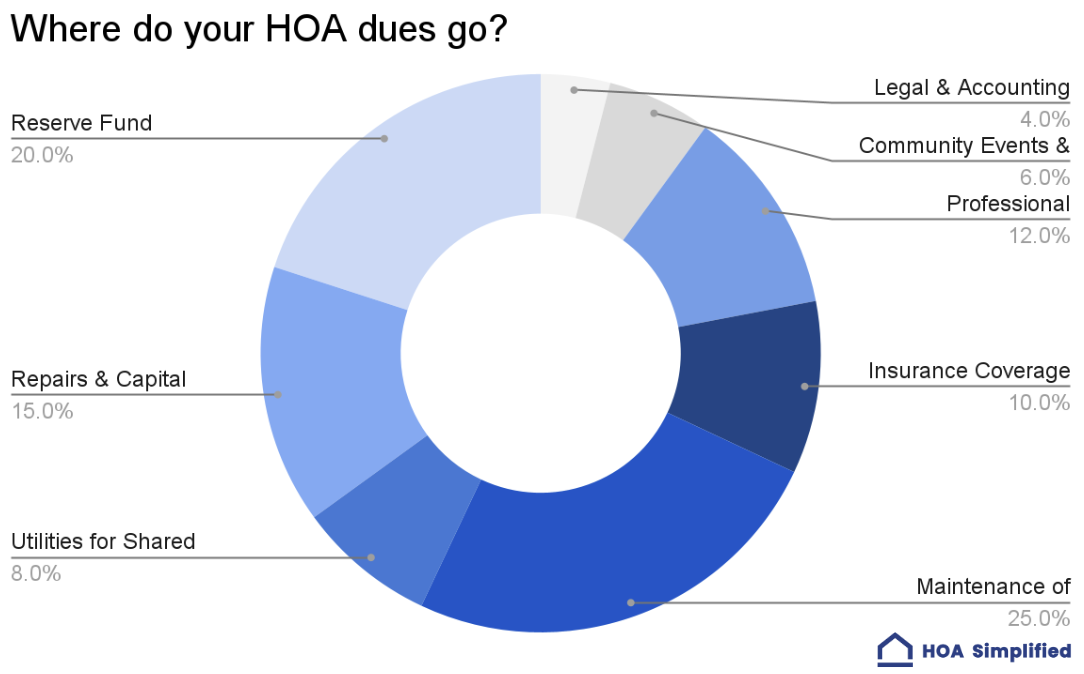
Operating Expenses vs. Reserves
Before diving into specific categories, understand the fundamental split in HOA budgets.
Operating expenses cover day-to-day, recurring costs. Landscaping, utilities, insurance, administrative work, and routine maintenance all fall under operations. These expenses happen monthly or annually and keep your community functioning normally.
Reserve funds are savings for major future projects. Repaving the parking lot, replacing the roof, renovating the pool. These big-ticket items don't happen every year, but they're inevitable. Reserves ensure money is available when needed rather than hitting homeowners with surprise special assessments.
Most HOAs allocate 60% to 85% of dues to operations and 15% to 40% to reserves. The exact split depends on your community's age, amenities, and deferred maintenance needs.
Landscaping and Grounds Maintenance
For most communities, landscaping is one of the largest expense categories.
This includes mowing lawns, trimming bushes, planting seasonal flowers, maintaining irrigation systems, and removing leaves and debris. In some communities, it also covers tree trimming, fertilization, and weed control. Landscaping affects your property's curb appeal and market value. Well-maintained grounds make a positive first impression. Neglected landscaping signals problems to potential buyers.
Costs vary widely based on climate, property size, and service frequency. A small townhouse community in a dry climate spends far less than a large community with extensive grass and tropical plants.
Common Area Utilities
Your dues pay for electricity, water, gas, sewer, and trash removal for shared spaces.
Common area lighting runs continuously in parking lots, walkways, and entry areas. Clubhouses and amenity buildings have heating, cooling, and water costs. Pools require substantial water and electricity for pumps and heaters.
In some communities, especially condos, the master association pays water and sewer for individual units as well as common areas. This can be a significant portion of the budget.
Utility costs have increased dramatically in recent years. Many HOAs are implementing energy-efficient upgrades to control these expenses long-term.
Insurance Premiums
HOAs carry multiple insurance policies protecting the association and homeowners.
Property insurance covers common area buildings and structures. Liability insurance protects against lawsuits from injuries on association property. Directors and officers insurance protects board members from personal liability for decisions made in their official capacity.
Some communities also carry flood insurance, earthquake coverage, or specialized policies for amenities like pools or fitness centers.
Insurance represents a major expense for most HOAs, often 10% to 20% of the budget. Premiums have risen sharply in many areas due to increased natural disaster claims and litigation.
Repairs and Maintenance
Routine upkeep keeps your community functional and prevents small problems from becoming expensive disasters.
This includes repainting building exteriors, repairing parking lot cracks, fixing broken lights, cleaning gutters, servicing pool equipment, and maintaining amenity facilities.
Questions about your HOA budget? Get Expert Guidance
Well-run HOAs perform preventive maintenance that costs less than waiting for things to fail. Sealing asphalt cracks is cheaper than repaving. Repainting wood siding is cheaper than replacing rotted boards.
Deferred maintenance always costs more in the long run. If your HOA is skipping routine upkeep to keep dues low, you're paying for expensive repairs later.
Administrative and Professional Services
Running an HOA requires administrative work: processing dues payments, preparing financial statements, scheduling meetings, maintaining records, and communicating with homeowners.
Some HOAs hire professional firms to handle these tasks. Others rely on volunteer boards doing the work themselves. Many use a hybrid approach where major functions are professional while day-to-day tasks are volunteer-led.
Professional support typically includes accounting services, legal advice, collections for delinquent dues, and compliance assistance. These services ensure your HOA operates legally and efficiently.
Legal fees can spike when disputes arise. Enforcing rules against non-compliant homeowners, defending against lawsuits, or navigating complex regulatory requirements all require attorney involvement.
Amenity Operations
If your community has pools, fitness centers, playgrounds, or clubhouses, your dues fund their operation.
Pool maintenance alone can be expensive. You're paying for chemicals, cleaning, repairs, lifeguards or monitoring systems, inspections, and seasonal opening and closing.
Fitness centers need equipment maintenance, cleaning, and eventual replacement. Playgrounds require regular safety inspections and surface repairs. Clubhouses need utilities, cleaning, repairs, and sometimes rental coordination.
Communities with extensive amenities typically have higher dues than those with minimal shared facilities.
Reserve Fund Contributions
A portion of every dues payment goes into reserve accounts for future major projects.
Reserve studies analyze your community's common elements, estimate their remaining useful life, and project replacement costs. This tells your board how much to save annually to avoid special assessments when big projects hit.
Underfunding reserves is one of the most common HOA financial mistakes. It keeps current dues artificially low but guarantees special assessments or deferred maintenance in the future.
Adequately funded reserves protect property values. Potential buyers and their lenders review reserve fund levels when evaluating whether to purchase in your community.
Snow Removal and Regional Expenses
Communities in cold climates spend significant money on snow plowing, sidewalk clearing, and ice management. This can represent 10% or more of annual budgets in northern areas.
Communities in hurricane zones might spend more on storm preparation and recovery. Desert communities face different landscaping costs than temperate regions.
Your location affects how dues are allocated across categories.
What to Do If Spending Seems Unclear
Every homeowner has the right to review HOA financial records. If you don't understand where your dues are going, ask for information.
Request copies of the annual budget, monthly financial statements, and year-end reports. These documents break down income and expenses by category.
Attend board meetings where finances are discussed. Ask questions when something isn't clear. Review meeting minutes to understand major spending decisions.
If your board is resistant to sharing financial information, that's a red flag. State laws typically require HOAs to provide financial records to homeowners upon request.
Consider requesting a financial audit or review by an independent CPA. This provides professional evaluation of whether funds are being managed appropriately.
Signs Your Dues Are Being Managed Well
Well-managed HOAs show clear signs in how they handle money.
They maintain adequate reserve funds, typically at least 70% of what the reserve study recommends. They perform regular maintenance rather than deferring it. They provide detailed financial reports to homeowners.
They get competitive bids for major contracts rather than automatically renewing with existing vendors. They shop insurance annually to ensure competitive rates.
They communicate major expenses before they happen, giving homeowners time to understand why spending is necessary.
Signs Your Dues Are Being Mismanaged
Warning signs include consistently underfunded reserves, frequent special assessments, deferred maintenance despite adequate dues income, and lack of financial transparency.
If your common areas look poorly maintained while dues keep increasing, ask why. If the board can't explain where money goes, that's a problem.
Homeowners should be alert for conflicts of interest, like board members awarding contracts to their own businesses or family members.
The Bottom Line
HOA dues fund essential services that maintain your property value and quality of life. Landscaping, utilities, insurance, repairs, amenities, and reserve savings all compete for limited budget dollars.
Understanding where your money goes helps you evaluate whether your board is making responsible decisions. It also helps you have informed discussions about budget priorities.
If you have questions about how your specific community spends dues, exercise your right to review financial records. Attend meetings. Ask questions.
Your HOA exists to serve homeowners. Financial transparency should be standard, not something you have to fight for.