New board members often ask the same question: where do we even start? Your community has dozens of needs competing for limited time and money. Setting clear annual goals helps you focus efforts where they matter most.
Effective HOA goals aren't vague wishes like "make our community better." They're specific, measurable targets that guide decision-making and resource allocation throughout the year.
Here's how to set goals that actually improve your community.
Start with Financial Stability
Financial health underpins everything else your HOA does. If your budget is a mess, you can't maintain common areas, fund projects, or handle emergencies.
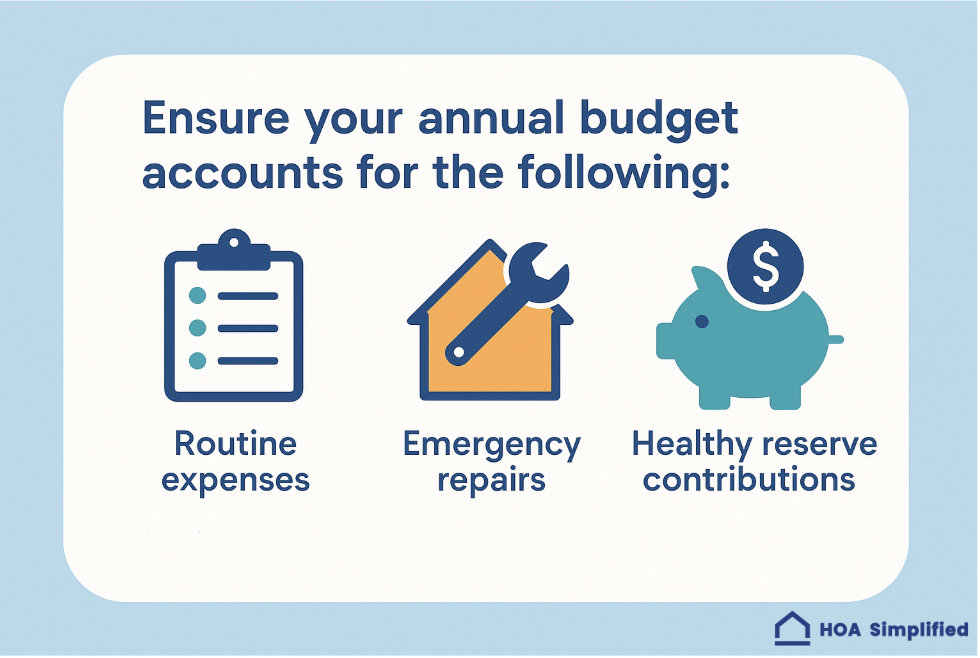
Your first goal should be creating or updating a realistic annual budget. Review the past two to three years of financial records. Look at income from dues, late fees, and facility rentals. Examine spending patterns across categories like landscaping, insurance, and repairs.
Identify where costs have increased and adjust your budget accordingly. If vendor contracts are renewing or you're facing price increases, factor those changes into your forecast. A realistic budget prevents special assessments and gives your board a clear financial roadmap.
Build Adequate Reserves
Reserve funds are your safety net for major repairs and replacements. Roofs, parking lots, and HVAC systems eventually need work. Without reserves, you're forced to hit homeowners with special assessments or delay critical maintenance.
Set a goal to allocate at least 20% of your annual budget to reserves. If you're currently funding less than that, increase contributions gradually over two to three years.
Conduct or update your reserve study every three to five years. This analysis tells you what major components will need replacement, when they'll fail, and how much money you'll need.
Planning ahead for big expenses prevents financial crises and maintains property values.
Prioritize Deferred Maintenance
Walk your property and identify maintenance issues that have been postponed. Peeling paint, cracked sidewalks, outdated lighting, aging pool equipment... these problems only get worse and more expensive when ignored.
Create a prioritized list based on safety, legal compliance, and impact on property values. Tackle the most urgent items first, then work down the list as budget allows.
Some repairs can't wait. If your community has safety hazards like broken stairs or inadequate lighting in parking areas, those need immediate attention. Other improvements can be phased over multiple years.
Setting specific maintenance goals prevents small problems from becoming major expenses.
Improve Transparency and Communication
Homeowners deserve to know how their dues are spent and what decisions the board is making. Poor communication breeds distrust and disengagement.
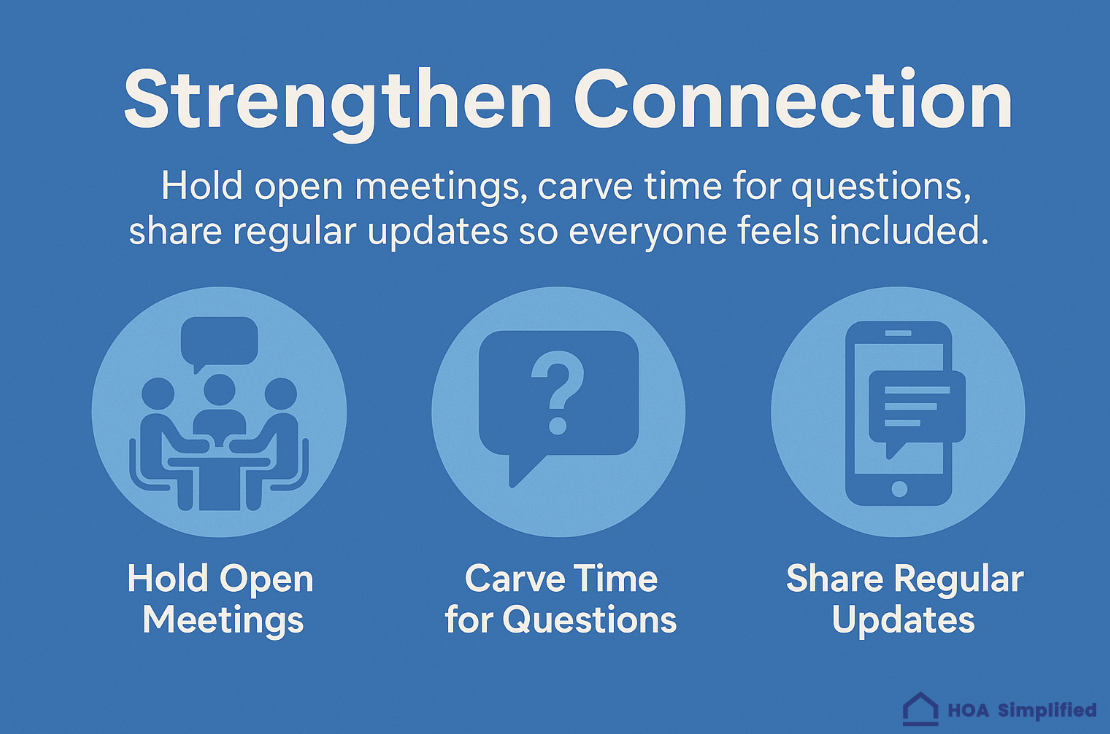
Set goals for regular communication. This might mean monthly email updates, quarterly newsletters, or maintaining an active community website with meeting minutes and financial reports.
Make board meetings accessible. If your state allows virtual meetings, offer that option. Record meetings for homeowners who can't attend. Provide clear agendas in advance so residents know what will be discussed.
Need help with HOA operations? Get a Free Consultation
When homeowners feel informed, they're more likely to support board decisions and participate in community activities.
Focus on Rule Enforcement Consistency
Inconsistent rule enforcement creates resentment. When some homeowners get warnings while others violate rules without consequences, respect for the board erodes quickly.
Establish clear enforcement procedures if you don't already have them. Document violations, send notices promptly, and apply penalties consistently regardless of who the homeowner is.
Train board members on your enforcement process. Everyone should understand what violations warrant warnings versus fines, what the appeal process looks like, and how to document everything properly.
Fair, consistent enforcement maintains community standards without creating conflicts.
Enhance Community Engagement
Strong communities aren't just well-maintained. They're places where neighbors know each other and participate together.
Plan social events throughout the year. These don't need to be elaborate or expensive. Seasonal barbecues, holiday parties, or community cleanup days bring people together.
Create volunteer opportunities for homeowners who want to contribute. Maybe someone has landscaping expertise and would help design flower beds. Perhaps a retired accountant could review your financial statements.
When residents feel connected to their community, they take better care of their properties, participate in HOA activities, and support board initiatives.
Set Realistic Timelines
Once you've identified your goals, break them into actionable steps with specific deadlines.
Don't try to accomplish everything at once. If you have ten maintenance projects identified, you probably can't complete all of them in one year. Prioritize the most critical items and schedule others for future years.
Assign responsibility for each goal. Who on the board will oversee budget forecasting? Who will coordinate the social events? Who will manage the reserve study update?
Clear ownership prevents goals from falling through the cracks.
Track Progress and Adjust
Review your goals quarterly. Are you on track? Have circumstances changed that require adjusting priorities?
Maybe you planned to repave the parking lot, but emergency roof repairs consumed that budget. That's okay. Adapt your plan and communicate changes to homeowners.
Document what you accomplished and what got deferred. This creates continuity when new board members join and helps set realistic expectations for future years.
Common Goal-Setting Mistakes
Avoid setting goals that are too vague. "Improve community appearance" isn't actionable. "Plant 50 new shrubs along the entrance and power wash all building exteriors by June 30" gives you something concrete to work toward.
Don't overcommit. New boards often want to fix everything immediately. That leads to burnout and failure. Focus on a few achievable priorities rather than a long list of wishes.
Don't ignore homeowner input. Your community might have different priorities than your board assumes. Survey residents or hold a town hall to understand what matters most to them.
Sample Annual Goals
Here's what a realistic set of annual goals might look like for a small HOA:
Financial: Complete fiscal year budget by October, increase reserve contributions from 15% to 18%, collect 95% of dues within 30 days of billing.
Maintenance: Repave section two of parking lot, replace pool pump before summer season, power wash all exterior walls.
Communication: Launch community website, send monthly email updates, post meeting minutes within seven days.
Engagement: Host three social events, recruit two new committee volunteers, achieve 60% participation in annual meeting.
Governance: Update rules enforcement procedures, complete board training on fiduciary duties, review vendor contracts.
Notice how each goal is specific and measurable. At year-end, you can clearly evaluate whether you achieved them.
The Bottom Line
Yearly goals give your HOA board direction and accountability. They help you allocate resources effectively, communicate priorities to homeowners, and measure progress.
Start with financial stability and critical maintenance. Add communication improvements and community engagement. Keep goals specific, realistic, and measurable.
Review your progress regularly and adjust as needed. Document achievements to guide future boards.
Good planning doesn't guarantee perfect execution, but it dramatically increases your chances of making meaningful improvements to your community.