HOA board elections determine who leads your community for the next year. When elections are poorly organized or lack participation, the wrong people end up making important decisions.
A strong election process ensures qualified candidates step forward, voting is fair and transparent, and homeowners feel confident in the results. Here's how to make that happen.
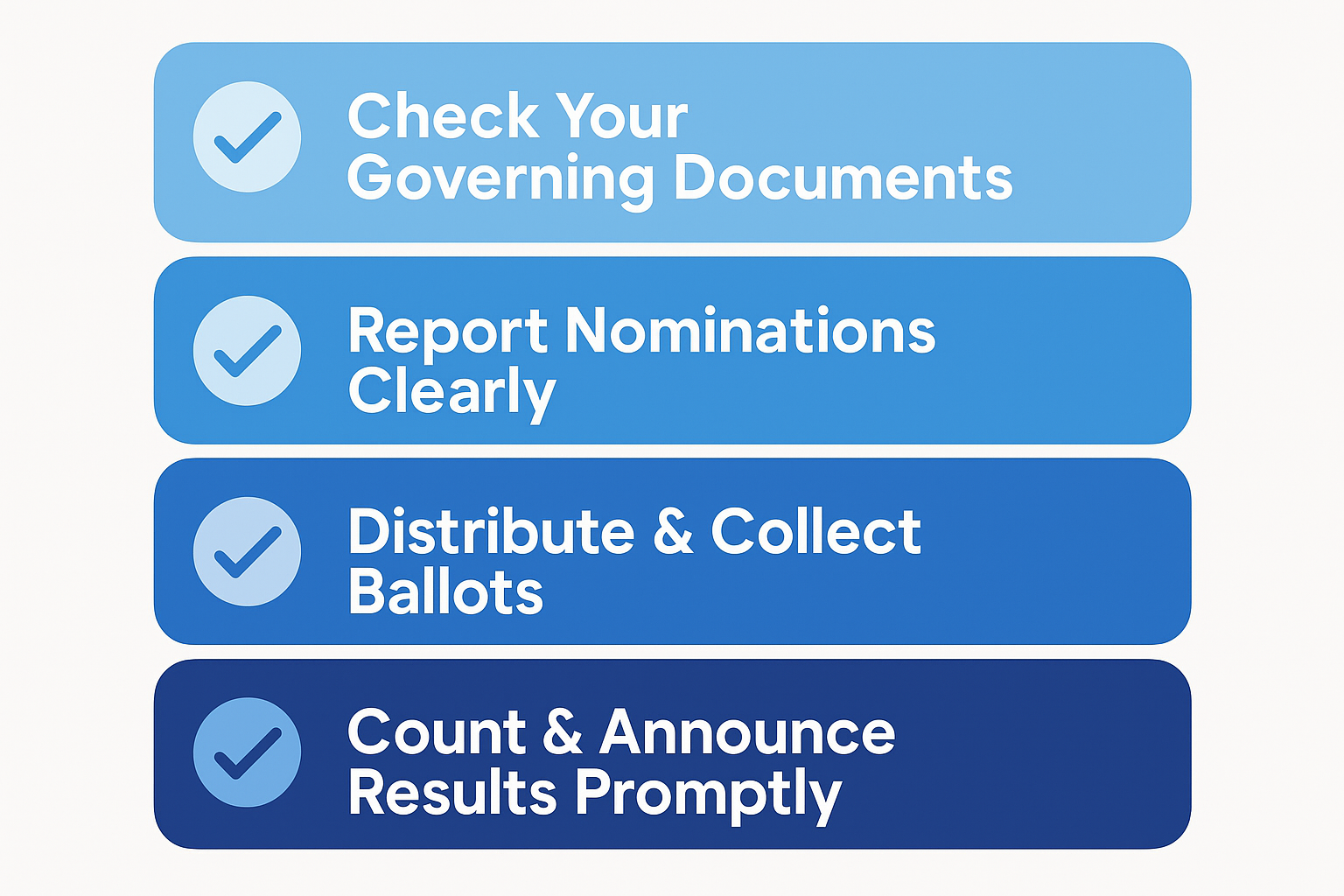
Start with Your Governing Documents
Before planning your election, review your CC&Rs and bylaws. These documents specify who's eligible to run, how many board seats are open, what the voting timeline looks like, and when results must be announced.
Different communities have different rules. Some require in-person voting, others allow proxies or electronic ballots. Some mandate secret ballots, others use voice votes.
Following your governing documents isn't optional. If you deviate from the prescribed process, homeowners can challenge the election results, potentially invalidating the entire vote. Take time to understand every requirement before you begin.
Form an Election Committee
Creating an impartial election committee separates election oversight from board control. This builds trust and ensures fairness.
The committee should include homeowners who aren't running for office and don't have close relationships with candidates. Their role is to handle candidate verification, ballot preparation, vote counting, and result announcements.
A neutral third party managing the process removes any appearance of bias. Homeowners feel more confident that votes are counted accurately and candidates are treated equally.
Provide Clear Timelines and Communication
Announce the upcoming election at least 30 to 45 days in advance. Specify which board positions are open, what the eligibility requirements are, when nominations close, and how voting will work.
Send reminders as key deadlines approach. Make information available in multiple formats: posted notices, emails, community websites, and newsletters.
Clear communication prevents confusion and increases participation. Homeowners who understand the process are more likely to vote or consider running themselves.
Give Candidates a Fair Platform
Once candidates are confirmed, give them equal opportunities to introduce themselves. Consider hosting a candidates' forum where residents can ask questions and hear each person's vision for the community.
Provide space in your newsletter or website for candidate statements. Keep word counts and formats consistent so no one has an unfair advantage.
If one candidate gets access to community communication channels, all candidates must receive the same opportunity. Anything less undermines the election's integrity.
Struggling with HOA governance? Get Expert Help
Offer Multiple Voting Options
Make voting as accessible as possible. Consider offering mail-in ballots, in-person voting at the annual meeting, and proxy options for homeowners who can't attend.
Some communities use electronic voting platforms that allow secure online participation. This can significantly increase turnout, especially among younger homeowners or those who travel frequently.
Whatever methods you offer, ensure they're secure and verifiable. Ballots should be anonymous but votes should be traceable to eligible homeowners to prevent fraud.
Count Votes Transparently
Vote counting should happen in view of any homeowner who wants to observe. The election committee should document the process and be prepared to answer questions about how votes were tallied.
Once counting is complete, announce results immediately. Post them on your website and send notification to all homeowners within 24 hours.
Transparency in counting prevents disputes and builds confidence in the outcome.
For Candidates: How to Run Effectively
If you're considering running for your HOA board, preparation matters. Here's how to present yourself as a credible candidate.
Attend several board meetings before announcing your candidacy. Familiarize yourself with current issues, ongoing projects, and budget concerns. Nothing undermines a candidate faster than appearing uninformed about community challenges.
Connect with neighbors before the election. Attend social events, participate in community apps, and have conversations at the mailbox. Personal relationships matter in small community elections.
Prepare a candidate statement that introduces who you are, why you're running, and what specific improvements you'd like to see. Be concrete. Instead of saying "I'll improve our community," say "I'll prioritize updating our aging pool equipment and improving transparency in budget communications."
For Voters: Make Informed Choices
As a voter, your responsibility is to evaluate candidates thoughtfully. Don't just vote for friends or the first name you recognize.
Review candidate statements carefully. Attend the candidates' forum if one is offered. Ask questions about specific issues you care about.
Consider what skills the board needs. Does your community need financial expertise because the budget is strained? Legal knowledge because you're facing compliance issues? Maintenance background because repairs keep getting delayed?
Vote for candidates who bring needed skills and demonstrate genuine commitment to serving the community.
Common Election Mistakes to Avoid
Don't rush the process. Elections thrown together at the last minute lead to confusion, low turnout, and potential legal challenges.
Don't allow board members to count votes. This creates a conflict of interest even if no actual impropriety occurs. Perception matters as much as reality.
Don't exclude homeowners from observing the vote count. Transparency protects everyone and prevents disputes.
Don't make exceptions to your bylaws because they're inconvenient. If your documents require 30 days' notice, you can't give 15 days because you're short on time.
Building Long-Term Engagement
A strong election isn't just about one vote. It's about building a culture where homeowners regularly participate in community governance.
Encourage residents to attend board meetings throughout the year, not just during elections. Host social events that bring neighbors together. Create volunteer opportunities for people to contribute without joining the board.
When homeowners feel connected to their community, they're more likely to vote, run for office, and support board decisions.
The Bottom Line
Strong HOA elections require planning, transparency, and fair processes. They need engaged candidates, informed voters, and neutral oversight.
When you get elections right, your community benefits from qualified leadership and homeowner confidence in the process. When you get them wrong, you risk disputes, poor governance, and resident apathy.
Invest time in running your election properly. Your community's future depends on it.