Making every dollar count is essential for HOA boards. Smart financial strategies reduce costs without sacrificing community quality. By attacking expenses on multiple fronts like taxes, budgets, reserves, insurance, vendors, and compliance, your community can make homeowner dues go further.
Secure Tax-Exempt Status
Many HOAs qualify for tax-exempt status under IRS Section 528. This election can save thousands of dollars annually in federal income taxes. The process requires filing Form 1120-H annually.
Requirements for tax-exempt status include:
- At least 60% of gross income from member dues, fees, and assessments
- At least 90% of expenses for acquisition, construction, or care of association property
- At least 85% of lots available for residential use
Most HOAs meet these criteria easily. The savings accumulate significantly over time. Professional tax preparation ensures compliance and maximizes benefits.
State tax exemptions may also be available. Research your state's specific requirements. Many states offer property tax exemptions for common areas or income tax exemptions for qualifying associations.
Optimize Your Budget Process
Proper budgeting prevents wasteful spending and surprise expenses. Start by analyzing historical spending patterns. Where does money actually go versus where you planned to spend it?
Prioritize essential expenses that directly contribute to community wellbeing. Maintenance, security, insurance, and utilities form the foundation. Discretionary expenses come after covering necessities.
Zero-based budgeting forces evaluation of every expense. Rather than increasing last year's numbers by a percentage, justify each line item from scratch. This process reveals unnecessary spending.
Involve multiple board members in budget preparation. Different perspectives catch assumptions and identify opportunities. The treasurer shouldn't work in isolation.
Allocate at least 20% of your annual budget to reserves. This funding prevents special assessments when major components need replacement. Consistent reserve contributions cost less than emergency funding.
Review and Negotiate Vendor Contracts
Vendor expenses typically represent the largest controllable costs. Reviewing existing contracts and relationships is crucial for budget optimization.
Evaluate Current Vendors by comparing costs, service quality, and responsiveness. Are you getting value for your money? Do vendors deliver what they promise?
Seek Competitive Bids for major services every few years. Landscape care, pool services, and janitorial work should be periodically rebid. Competition keeps vendors sharp and prices fair.
Negotiate Better Terms with existing vendors. Long-term contracts, bundled services, or off-season scheduling might reduce costs. Vendors often prefer retaining clients over maximizing every dollar.
Bundle Services when possible. One company providing multiple services may offer package discounts. Coordination also improves since one vendor knows your property thoroughly.
Don't automatically choose the lowest bid. Quality matters. Poor service costs more in the long run through repairs, complaints, and turnover. Balance price with proven reliability.
Want help optimizing vendor relationships? Get Expert Vendor Support
Reduce Insurance Costs
Insurance premiums represent significant expenses, but several strategies can reduce costs without sacrificing coverage.
Increase Deductibles to lower premiums. Higher deductibles mean lower monthly costs. Ensure reserves can cover the deductible if claims occur.
Bundle Coverage with one carrier. Most insurers discount policies when you buy multiple coverage types. Property, liability, and directors and officers insurance from one carrier costs less than separate policies.
Improve Risk Profile to qualify for better rates. Security systems, maintenance programs, and safety protocols demonstrate responsible operations. Insurers reward lower-risk communities.
Review Coverage Annually to ensure appropriate limits. Communities change over time. Make sure coverage matches current replacement values and liability exposures.
Shop insurance every few years. Carriers compete aggressively for good risks. Your current carrier may match competitor quotes to retain your business.
Implement Energy Efficiency Measures
Utility costs for common areas add up quickly. Energy efficiency investments pay for themselves through reduced monthly expenses.
LED Lighting uses 75% less energy than incandescent bulbs and lasts 25 times longer. Converting common area lighting cuts electricity costs significantly.
Programmable Thermostats optimize heating and cooling in clubhouses and common buildings. Automatic adjustments prevent heating or cooling empty spaces.
Water Conservation through drought-resistant landscaping, efficient irrigation systems, and low-flow fixtures reduces water bills. These improvements also support environmental sustainability.
Solar Panels may make sense for communities with large common buildings or extensive outdoor lighting. Initial costs are substantial, but long-term savings can be significant.
Calculate payback periods before major investments. Some efficiency measures pay for themselves within months, others take years. Prioritize quick-payback improvements first.
Prevent Costly Compliance Penalties
Staying ahead of legal and regulatory requirements prevents expensive fines and corrections. Proactive compliance costs less than reactive fixes.
File Tax Returns on Time to avoid late filing penalties. Set calendar reminders well before deadlines. Consider professional preparation to ensure accuracy.
Maintain Required Reserves according to state law. Many states mandate minimum reserve funding. Violations can trigger fines and forced compliance.
Meet Reporting Deadlines for annual disclosures, financial statements, and other required filings. Late submissions often carry automatic penalties.
Follow Proper Procedures for meetings, elections, and enforcement. Procedural violations lead to legal challenges that cost thousands in attorney fees.
Clean processes that follow requirements consistently cost less than fixing problems after complaints or violations.
Collect Assessments Efficiently
Uncollected assessments represent lost revenue that must be made up elsewhere. Efficient collection processes maximize income without raising rates.
Automate Payment Processing to reduce administrative costs and improve payment rates. ACH transfers and online payment portals make paying easier for homeowners.
Enforce Collection Policies Consistently to minimize delinquencies. Clear communication about due dates, late fees, and consequences encourages timely payment.
Address Delinquencies Promptly before balances grow large. Small balances are easier to collect than substantial debts. Early intervention prevents chronic delinquency.
Consider Payment Plans for homeowners facing temporary hardship. Structured payment agreements recover money that might otherwise be uncollectible.
Leverage Professional Expertise
Professional community partners often save more than they cost. Expertise in taxes, budgets, reserves, insurance, vendors, and compliance prevents expensive mistakes.
Professionals negotiate better vendor rates through established relationships and volume. They identify cost-saving opportunities boards might miss. They also prevent compliance issues that trigger penalties.
Full compliance check-ups, budgeting guidance, reserve strategy, and vendor accountability help communities reduce risk, avoid unnecessary costs, and stay financially strong.
The Compound Effect
Small savings in multiple areas compound into significant annual reductions. A few percentage points on insurance, better vendor rates, energy efficiency, and avoided penalties add up quickly.
Focus on sustainable cost reductions, not one-time cuts that cause future problems. Deferred maintenance saves money initially but costs far more later. Quality vendors at fair prices beat cheap vendors who require constant oversight.
Smart financial stewardship demonstrates respect for homeowner investments. Communities that optimize spending without sacrificing quality earn resident trust and satisfaction.
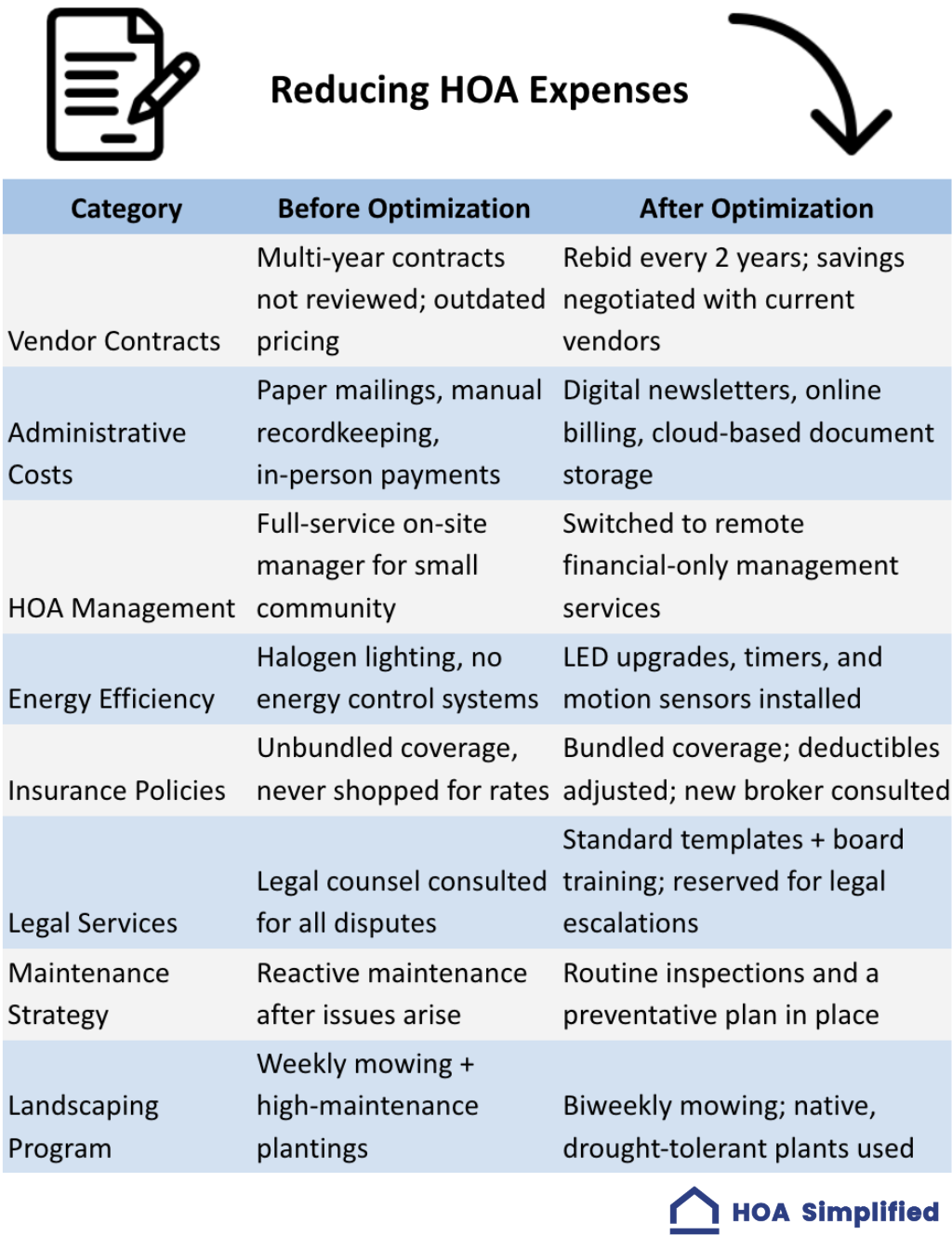
Here is a more detailed breakdown of the best practices to reduce expenses: