Many homeowners face unnecessary delays and frustration with architectural requests. The process is often unclear, with homeowners not knowing what they need approval for or how to submit complete applications. Taking a few extra minutes to understand the ACC process can save you significant time and stress.
What Is an ACC Request?
ACC stands for Architectural Control Committee. This committee reviews any exterior changes to keep the neighborhood consistent and appealing. They ensure communities maintain visual harmony across all properties.
An ACC request is a formal application for approval before you start any exterior modifications. Skipping this approval process can result in fines, project delays, or requirements to undo completed work. The committee exists to protect property values for everyone.
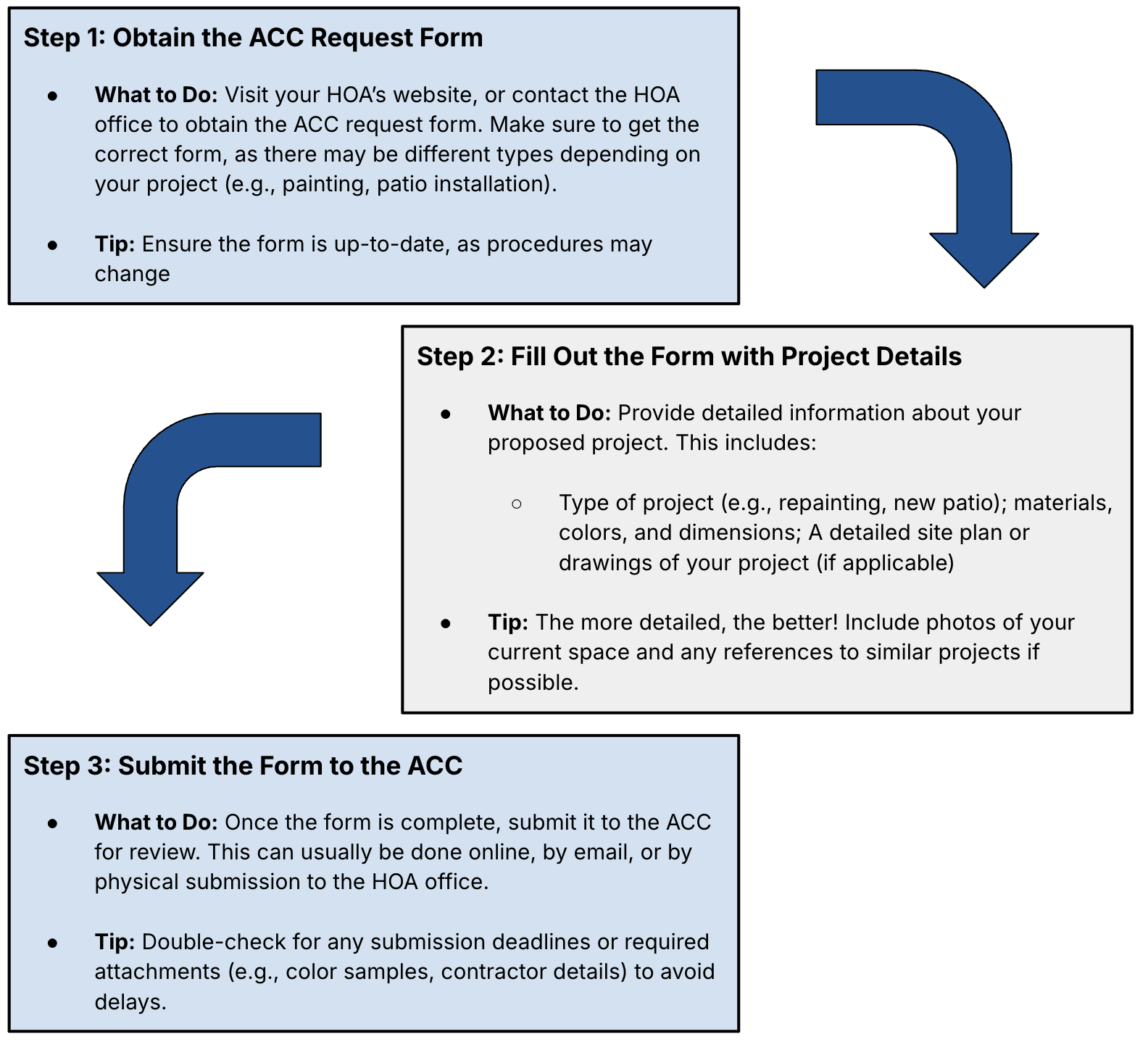
See below for a step-by-step visual to submitting your ACC request:
Projects That Require Approval
Most HOAs require approval for these common projects:
- Exterior paint color changes
- New windows, doors, or roofing
- Fences, decks, gates, or storage sheds
- Solar panels or satellite dishes
- Significant landscaping modifications
- Patio covers or awnings
When in doubt, submit a request. Getting unnecessary approval is better than facing enforcement action. Your governing documents should list specific items requiring review.
Common Submission Issues
Three problems cause most ACC request delays:
Uncertainty about requirements. Many homeowners don't realize their project needs approval until they receive a violation notice. Review your CC&Rs before starting any exterior work.
Incomplete applications. Missing details, unclear drawings, or absent material samples force committees to request additional information. Each round of back-and-forth adds weeks to the process.
Extended waiting periods. Without clear timelines, homeowners don't know when to expect decisions. Most governing documents specify review timeframes, typically 30 to 45 days.
Preparing Your Request
Start by obtaining the official ACC request form. Your board or community website should provide this document. If no form exists, write a detailed letter describing your project.
Include comprehensive information:
- Detailed project description
- Specific materials and colors
- Dimensions and measurements
- Site plan or property diagram
- Photos of the affected area
- Manufacturer specifications
- Timeline for completion
More detail is always better than less. Committee members can't approve what they can't visualize. Attach samples of materials and color swatches when possible.
The Submission Process
Submit your complete application to the designated contact person. This might be the board president, committee chair, or community partner. Confirm receipt to ensure your request doesn't get lost.
Ask about the expected timeline for review. Most committees meet monthly, so submission timing matters. A request submitted just after a meeting might wait four to six weeks for initial review.
Follow up if you don't hear back within the stated timeframe. Professional committees should acknowledge receipt and provide status updates without prompting.
Questions about your community's ACC process? Get Expert Guidance
After Submission
The committee will review your request at their next meeting. They have three basic options: approve, deny, or request modifications.
Approval means you can proceed with your project as described. Some approvals include conditions or specific requirements. Read the approval letter carefully before starting work.
Denials should include reasons for the decision. These explanations help you understand whether modifications might gain approval. You typically have the right to appeal or resubmit with changes.
Modification requests mean the committee likes your concept but needs adjustments. Work with them to address concerns. Most committees want to approve projects when possible.
Starting Your Project
Wait for written approval before beginning any work. Verbal approvals don't protect you if disputes arise later. Keep the approval letter with your project documents.
Complete the work according to approved plans. Changes during construction may require new approval. Don't deviate from approved specifications without committee review.
Some communities require final inspection after project completion. This ensures the finished work matches approved plans. Schedule this inspection promptly to close out your request.
Working With Your Committee
Architectural committees serve your community as volunteers. They balance individual preferences with community standards. Respect their time by submitting complete, well-organized requests.
Attend the review meeting if allowed. Presenting your project in person can answer questions immediately. Committee members appreciate homeowners who care enough to participate.
Professional community partners can streamline the ACC process with clear forms, reasonable timelines, and consistent procedures. Efficient systems benefit both homeowners and committees.