Properly structured HOA meetings strengthen decision-making and build homeowner trust. The foundation begins by identifying your meeting type before planning logistics. When every board member understands their role in the meeting process, the HOA works better for everyone.
Understanding Your Meeting Types
Three primary formats serve different purposes in HOA governance:
Board Meetings are regular gatherings where elected members manage day-to-day operations. These meetings handle routine business like approving vendor contracts, addressing homeowner requests, and reviewing financial reports.
Annual Meetings bring all homeowners together once a year. These assemblies focus on electing new board members, reviewing major updates, and discussing long-term community planning. Annual meetings give every homeowner a voice in key decisions.
Special Meetings address specific urgent matters that can't wait for the next scheduled session. Rule changes, emergency budget approvals, and time-sensitive issues require these focused gatherings.
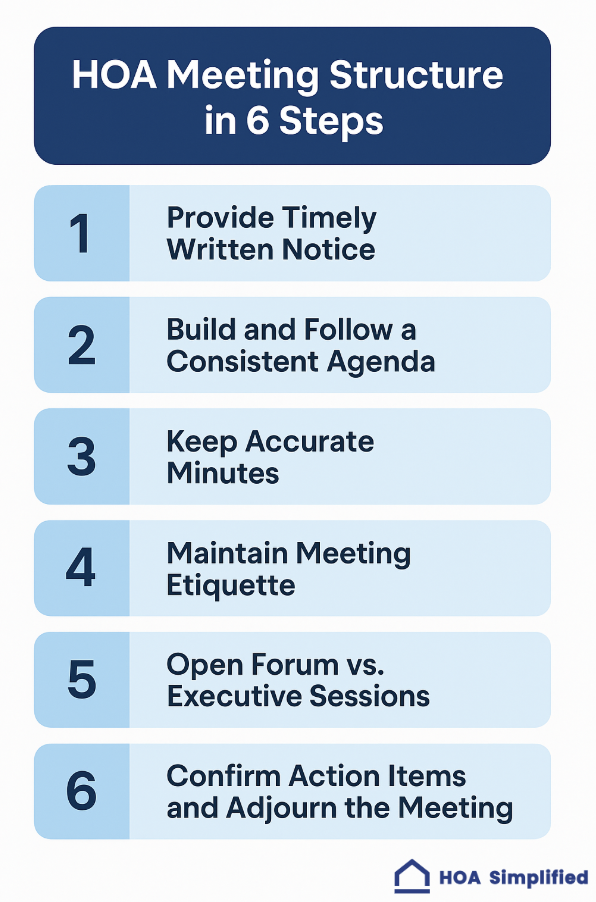
Step 1: Send Timely Written Notice
Notification timelines vary by meeting type and must follow your governing documents. Board meetings typically require 48 to 72 hours' notice. Annual meetings often need 15 to 30 days advance notification.
Every notice must specify the date, time, location or virtual link, and agenda items. Clear communication prevents confusion and ensures proper attendance. Homeowners can't participate if they don't know what's happening.
Step 2: Build a Consistent Agenda
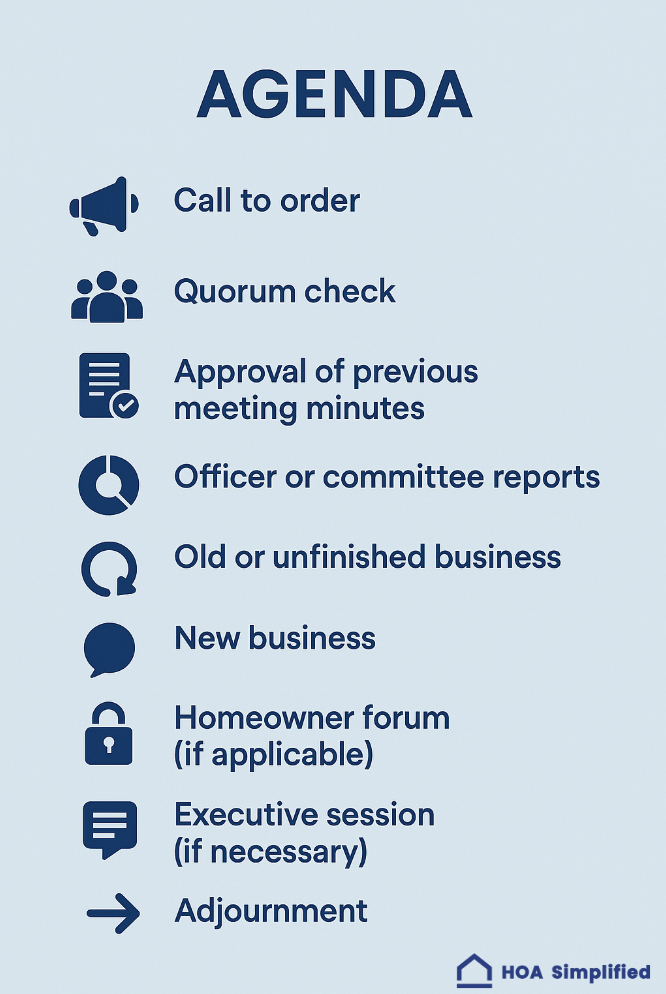
A logical agenda structure keeps discussions organized and productive. Standard components include:
- Call to order
- Quorum verification
- Approval of previous minutes
- Officer reports
- Old business
- New business
- Homeowner forum
- Adjournment
This structure creates predictability. Homeowners know when they can speak, and board members can prepare for each segment.
Step 3: Keep Accurate Minutes
The board president leads discussions while a designated secretary documents all proceedings and decisions. Minutes serve as the official record of board actions.
Accurate documentation protects the board legally and maintains transparency. These records help future boards understand past decisions. They also provide homeowners with accountability.
Step 4: Maintain Meeting Etiquette
Limiting homeowner comments to a few minutes prevents meetings from running too long. Keeping discussions respectful and on-topic maintains order.
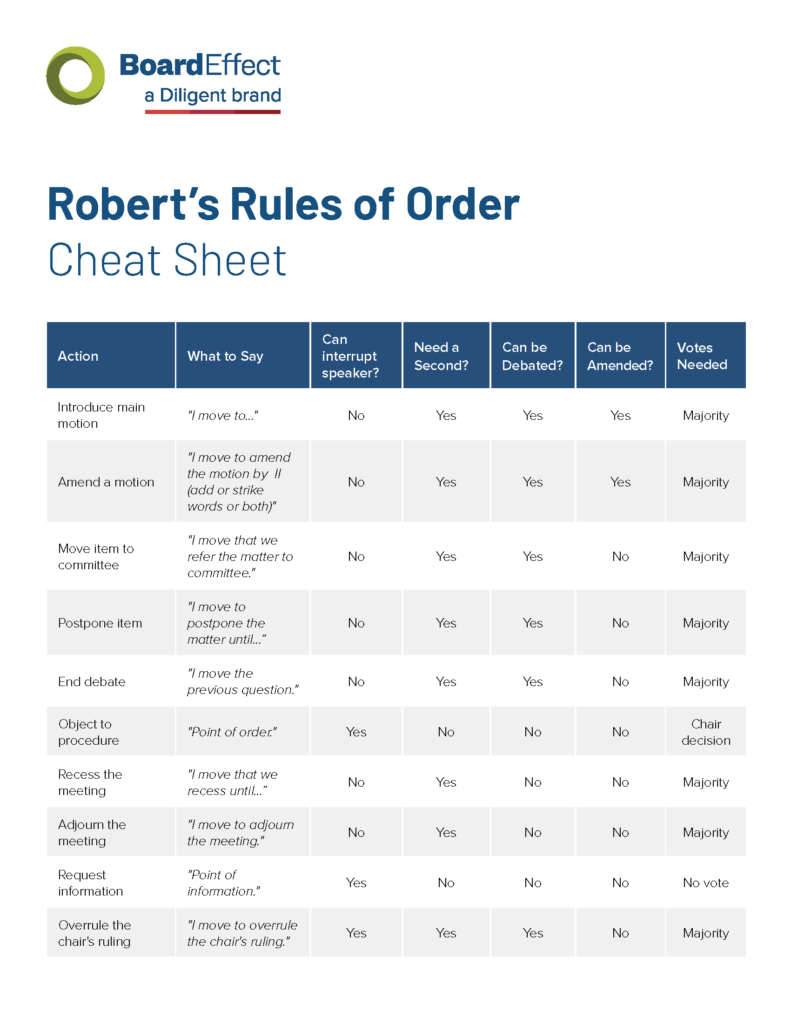
Consider adopting simplified Robert's Rules of Order for parliamentary procedures. These guidelines provide structure without overwhelming volunteers who aren't professional parliamentarians.
Need a ready-to-use agenda? Download Our Free Meeting Agenda Template
Step 5: Balance Open Forum and Executive Sessions
Public sessions accommodate homeowner questions and community input. This transparency builds trust and keeps residents engaged.
Confidential matters require closed executive sessions. Delinquent accounts, legal issues, and personnel concerns must remain private. State law often mandates which topics belong in executive session.
Never discuss matters in executive session that belong in open forum. Transparency is the default, privacy is the exception.
Step 6: Confirm Actions and Adjourn
Before ending the meeting, summarize all decisions made. Assign responsibilities with clear timelines so everyone knows their next steps.
Formally motion to adjourn with a vote. This parliamentary procedure closes the meeting properly. Announce the next meeting date so homeowners can mark their calendars.
Making Meetings Matter
Well-structured meetings accomplish more in less time. They demonstrate professionalism and competence to your community. They also make board service more satisfying for volunteers.
The key is consistency. Use the same structure for every meeting. Homeowners and board members alike will appreciate the predictability.
Start small if your current meetings lack structure. Implement one improvement at a time. Add an agenda. Improve your minutes. Tighten your notice procedures.
Each improvement compounds. Within a few months, your meetings will transform from chaotic to professional. Your community will notice the difference.
Professional guidance can accelerate this transformation. Expert support helps boards implement best practices without trial and error.