If you serve on an HOA board in California, the reserve study is one of the most important financial documents you will encounter. It directly affects how much homeowners pay in assessments, whether the association can afford major repairs, and how well the community maintains its property values over time.
Despite its importance, the reserve study is often misunderstood or underutilized by boards. This guide explains what a reserve study is, what it contains, and how to use it effectively.
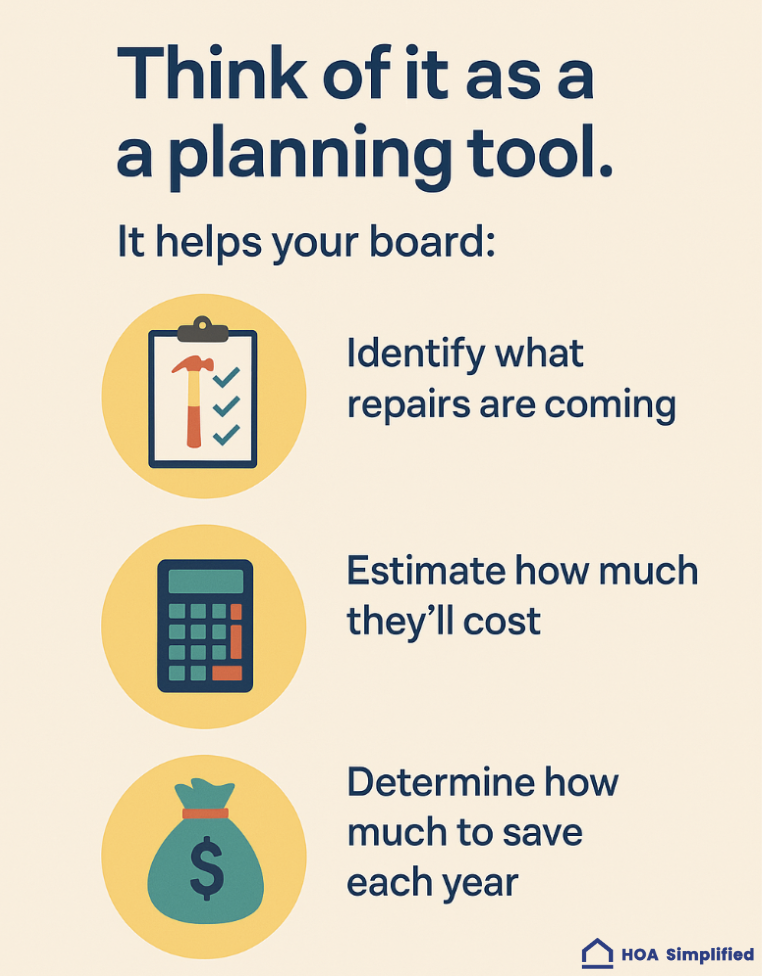
What Is a Reserve Study?
A reserve study is a comprehensive analysis of the association's common area components that will eventually need repair or replacement. It has two main parts:
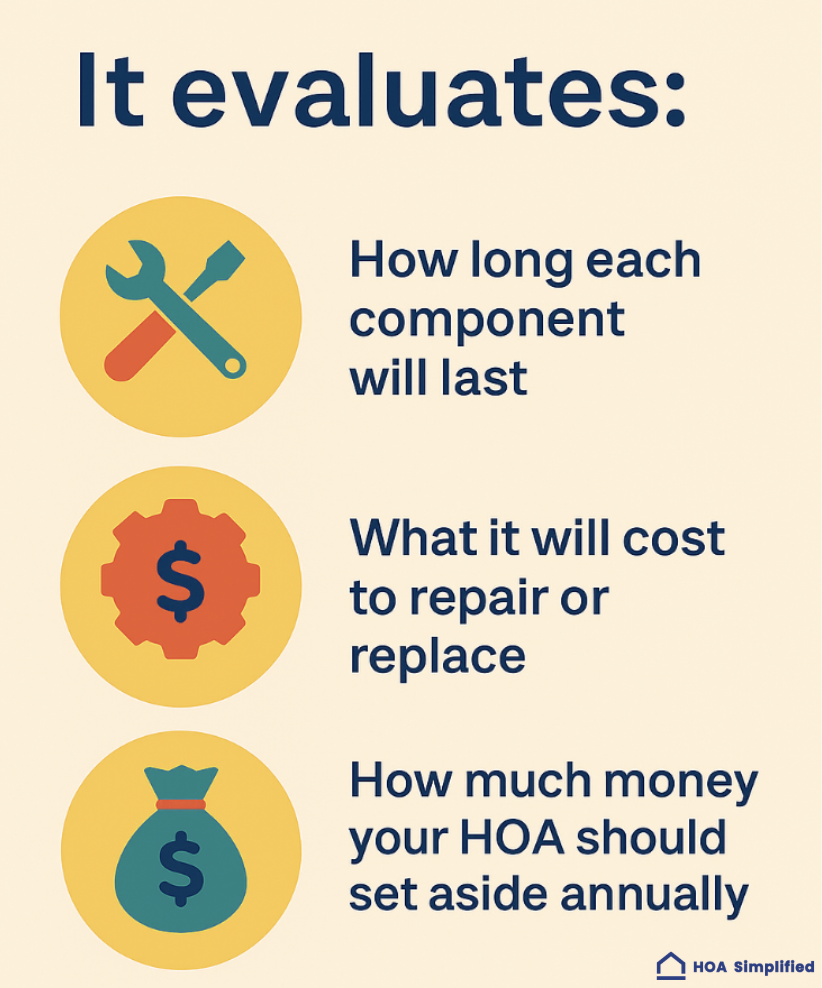
The Physical Analysis identifies every major component the association is responsible for maintaining. This includes roofing, exterior paint, asphalt and concrete surfaces, fencing, pool equipment, elevators, plumbing systems, and other shared infrastructure. For each component, the study estimates its current condition, remaining useful life, and estimated replacement cost.
The Financial Analysis evaluates whether the association's reserve fund is adequate to cover the projected expenses. It calculates the current funding level as a percentage, projects future costs, and recommends an annual contribution amount to keep reserves on a sustainable trajectory.
Together, these two analyses give the board a roadmap for the next 30 years of capital expenditures.
Why California Law Requires Reserve Studies
Under Civil Code Section 5550, California HOAs must conduct a reasonably competent and diligent visual inspection of accessible common area components at least once every three years. The reserve study must be reviewed annually and updated as needed to reflect changes in costs, conditions, or component inventories.
The law also requires boards to disclose the reserve funding status to homeowners as part of the annual budget report. This includes the current percent funded level, the amount of money in the reserve account, and any anticipated special assessments.
These requirements exist because inadequate reserves create serious problems. When a major system fails and the reserves are insufficient, the board is forced to levy a special assessment (often for thousands of dollars per unit) or take out a loan. Neither option is popular with homeowners, and both could have been avoided with proper planning.
Need help with your reserve study? Talk to Our Team
Understanding Percent Funded
The percent funded figure is the most commonly referenced metric in a reserve study. It represents the ratio of the association's actual reserve balance to the amount that should ideally be in the fund at that point in time.
- 70% or above: Generally considered adequately funded. The association is on a stable path.
- 30% to 69%: Considered below the ideal range. Special assessments or significant contribution increases may be needed in the coming years.
- Below 30%: A serious concern. The association is at high risk of being unable to fund a major repair without borrowing or levying a large special assessment.
Boards should aim to maintain funding at or above the 70% threshold. Letting the percentage drop may keep assessments low in the short term but creates significant financial risk.
How Much Does It Cost?
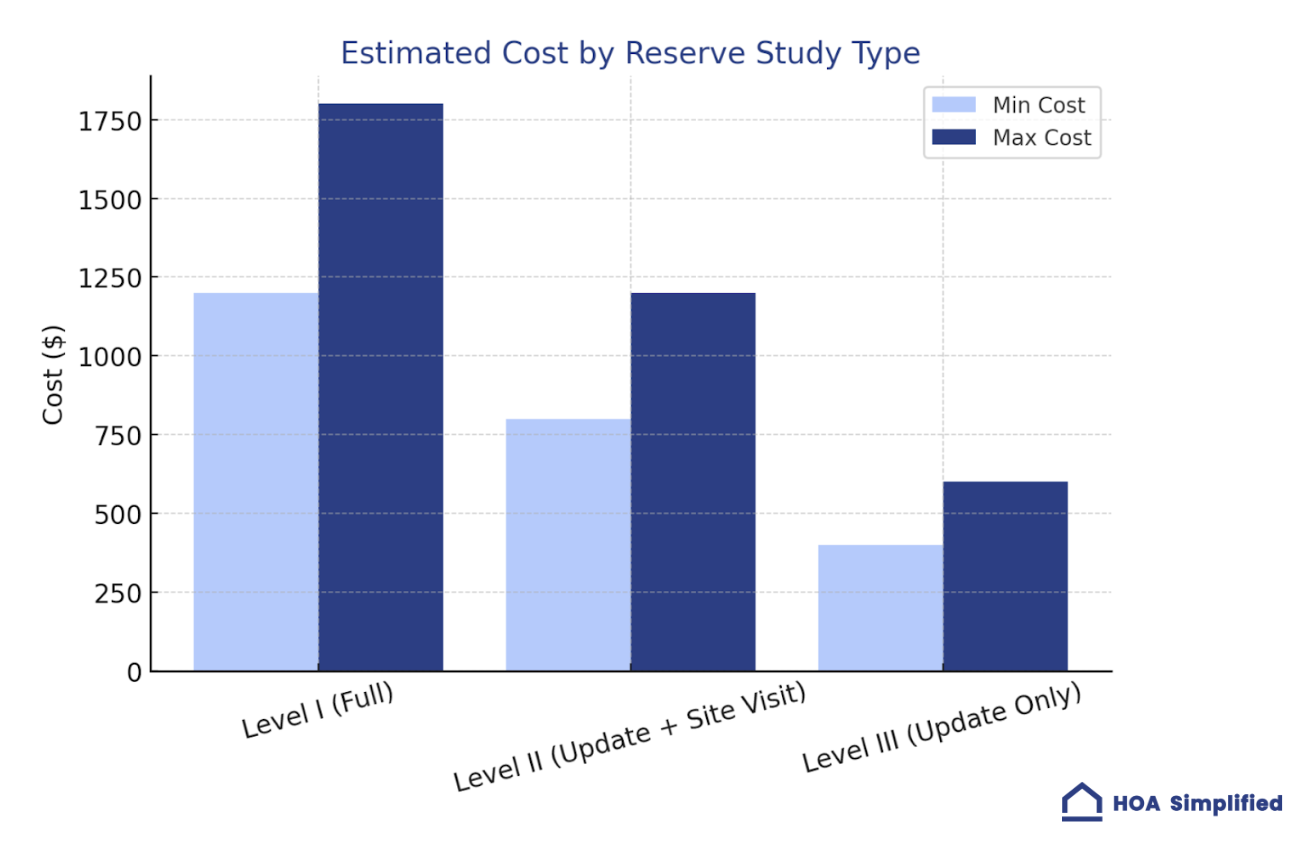
Pricing depends on scope and whether a site visit is included:
- Level III (Update Only): $400-$600
- Level II (Update + Site Visit): Higher mid-range
- Level I (Full): $1,200-$1,800+
It may seem like a lot up front, but compared to unexpected special assessments, it's a smart investment.
How to Use the Reserve Study Effectively
A reserve study sitting in a filing cabinet serves no one. Here is how boards should actively use this document:
Reference it during budget season. The recommended annual contribution from the reserve study should be a starting point for setting the reserve portion of your budget. Deviating below the recommendation should only be done with clear justification and a plan to catch up.
Update it after major projects. When the association completes a significant repair or replacement, notify the reserve study provider so the study can be updated. Completed projects reset the useful life clock on those components.
Share it with homeowners. Transparency about the community's long-term financial health builds trust. When homeowners understand that a well-funded reserve protects their investment, they are more likely to support adequate funding.
Use it when evaluating insurance. The replacement cost estimates in the reserve study can help your insurance broker ensure the association carries appropriate coverage levels.
Choosing a Reserve Study Provider
Select a provider who holds credentials from a recognized organization such as the Community Associations Institute (CAI) and has specific experience with California HOAs. A qualified professional will produce a thorough, defensible study that serves your community well for years. Request references and review sample reports before committing.
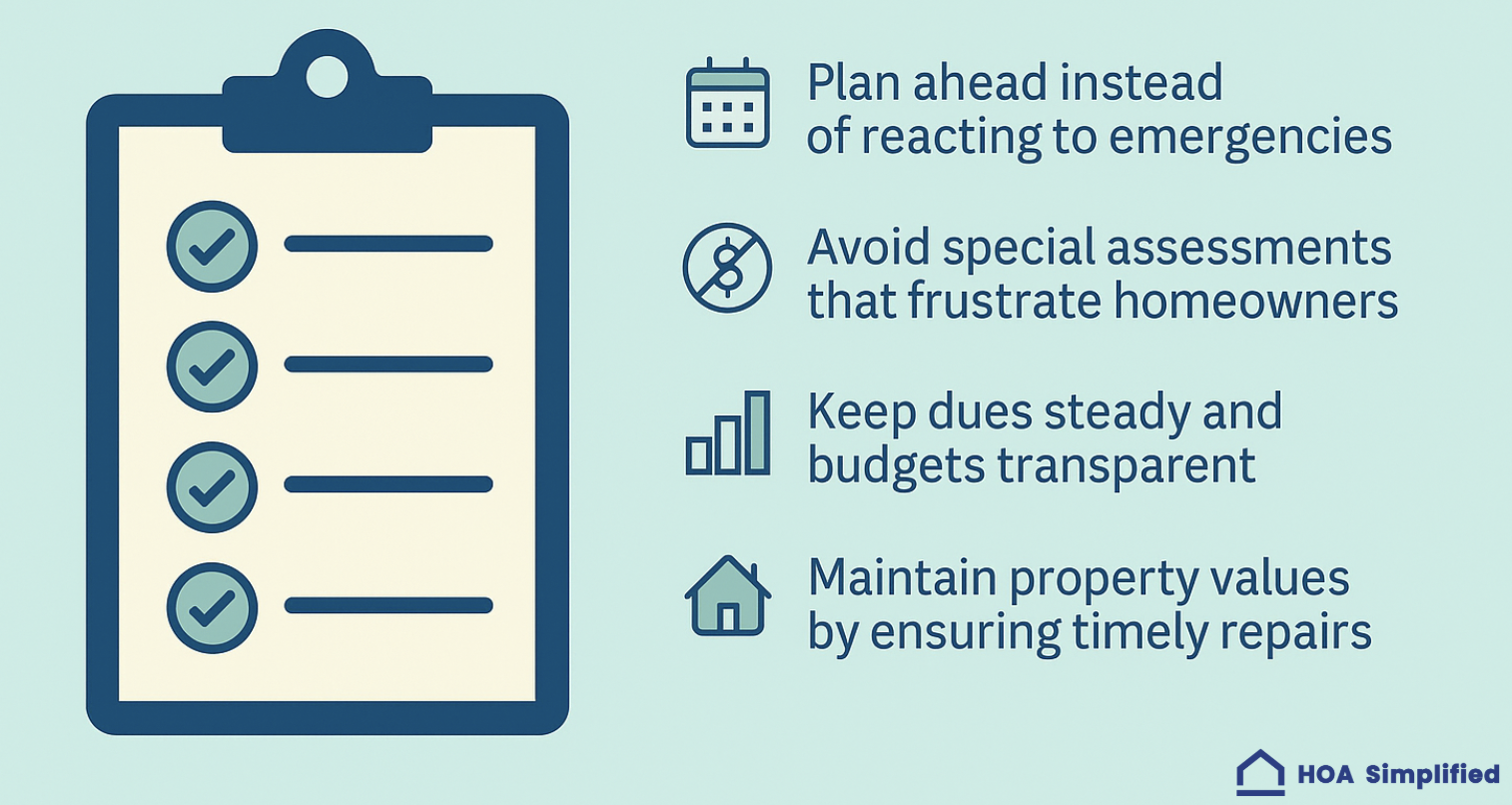
A reserve study is not just a regulatory requirement. It is a planning tool that, when used properly, keeps your community financially healthy and protects every homeowner's investment.