Every property sale in an HOA community triggers a resale certificate requirement. This legally mandated document provides buyers with critical information about the property's financial standing, compliance status, and community obligations.
Buyers need transparency before closing. HOAs need liability protection. Resale certificates deliver both when processed correctly.
What Information Resale Certificates Contain
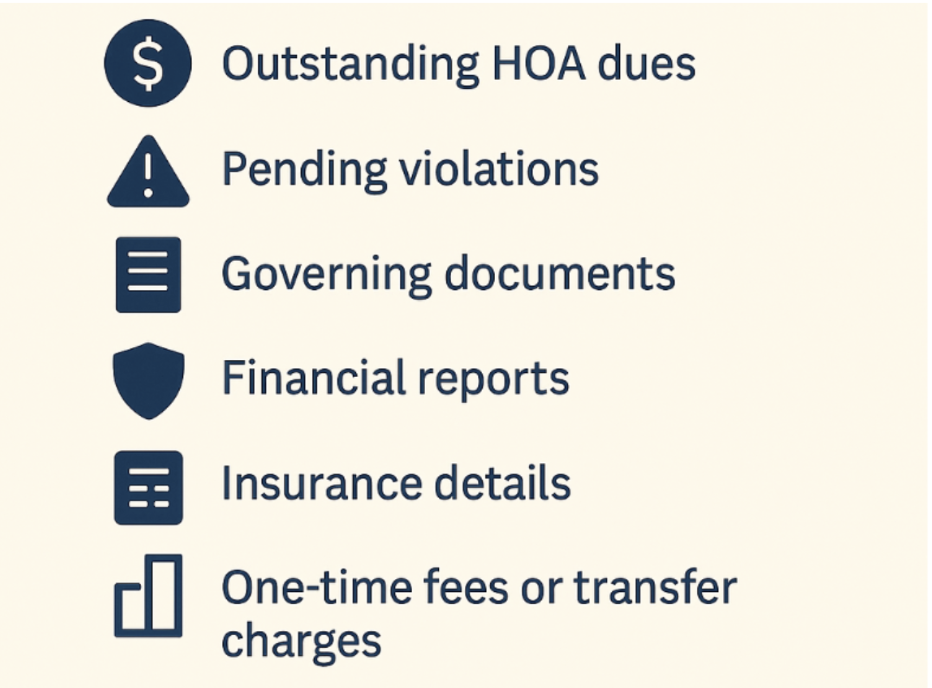
Resale certificates compile essential details that buyers and lenders require before finalizing transactions:
Financial Standing
Current assessment status shows whether the seller is paid current or owes past-due amounts. Outstanding balances, late fees, or special assessment obligations transfer to buyers unless resolved at closing.
Budget information reveals monthly assessment amounts and any upcoming increases. Reserve fund levels indicate the community's financial health and likelihood of special assessments.
Compliance Status
Architectural violations, unapproved modifications, or pending enforcement actions appear on resale certificates. Buyers discover whether properties comply with community standards or require corrective action.
Outstanding fines or hearing results show the property's history with community rules and board enforcement.
Governing Documents and Insurance
Resale certificates include or reference:
- CC&Rs (Covenants, Conditions, and Restrictions) that govern property use
- Bylaws and architectural guidelines
- Current insurance policies covering common areas
- Recent financial statements and budgets
This documentation helps buyers understand community rules, financial obligations, and insurance protection before purchase.
Why Resale Certificates Matter
These documents serve dual purposes that protect both buyers and communities.
Buyer Transparency
Purchasing property in an HOA community creates ongoing financial and procedural obligations. Buyers deserve clear information about assessment amounts, reserve health, pending special assessments, and rule enforcement patterns.
Resale certificates provide this transparency, allowing informed purchase decisions. Buyers who understand community obligations before closing become better homeowners after purchase.
HOA Liability Protection
Comprehensive resale certificates protect communities from liability claims. When buyers receive accurate information about financial obligations and compliance status, they can't later claim ignorance about conditions that existed at purchase.
Proper documentation creates clear records of what information was disclosed and when. This documentation proves invaluable when disputes arise.
The Processing Workflow
Resale certificate generation involves multiple steps and coordination between boards, escrow companies, and sometimes professional service providers.
Initial Request
Real estate transactions trigger certificate requests, typically from escrow companies or title firms handling the closing. These requests include property details and closing timelines.
Speed matters. Delayed certificates can postpone closings, frustrating buyers, sellers, and real estate professionals.
Information Compilation
Processing teams gather current information:
- Account balance and payment history
- Pending violations or enforcement actions
- Current budget and recent financial statements
- Reserve study results
- Insurance certificates
- Governing documents
For self-managed communities, board members compile this information manually. Professional services maintain current data that accelerates processing.
Custom Questionnaires
Escrow companies often submit detailed questionnaires requesting specific information about the property and community. Board members or professional teams complete these forms accurately and thoroughly.
Questions cover topics like pending litigation, planned special assessments, known construction defects, insurance claims history, and upcoming major repairs.
Accurate questionnaire responses require institutional knowledge about community history, financial planning, and ongoing issues.
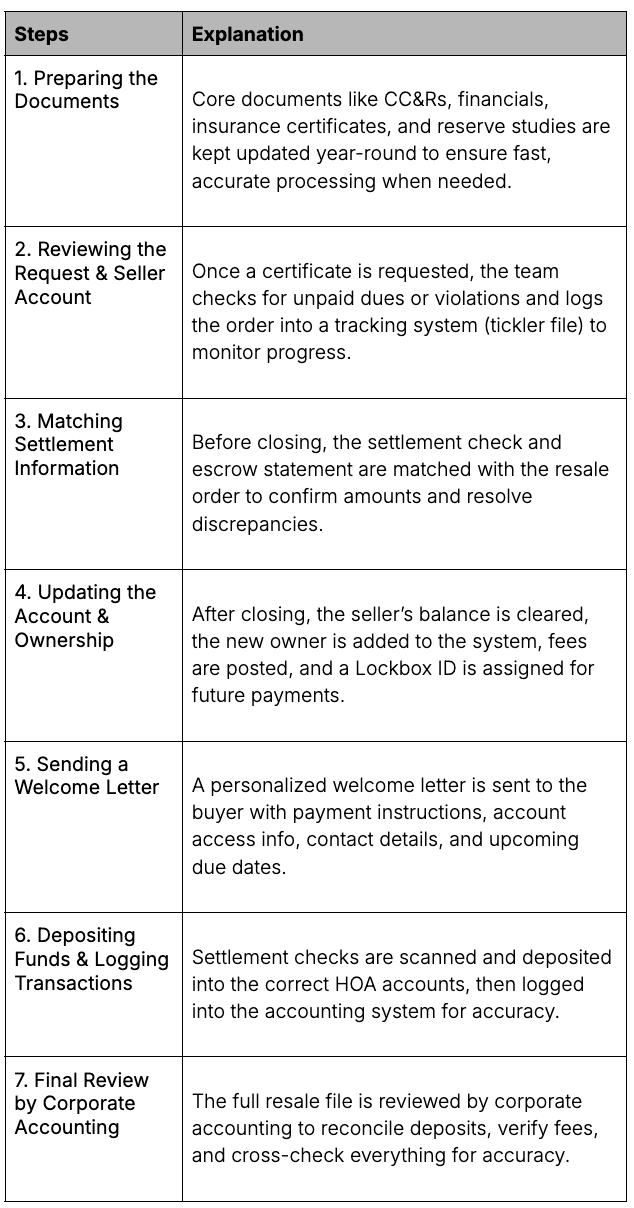
Step-by-step process to how the resale certificate process works:
Struggling with resale certificate processing? Get Professional Help
Document Maintenance Challenges
Resale certificates rely on current documentation. Outdated insurance policies, expired reserve studies, or incomplete financial statements create processing delays and raise buyer concerns.
The Tickler File System
Effective resale processing requires tracking systems (often called tickler files) that monitor:
- Certificate request dates and closing timelines
- Required document expiration dates
- Outstanding information needs
- Follow-up deadlines
Without systematic tracking, requests slip through cracks, documents expire unnoticed, and processing delays become chronic.
Keeping Documents Current
Professional teams monitor document expiration proactively:
- Insurance policies renew before expiration
- Financial statements close monthly on schedule
- Reserve studies update on recommended cycles
- Governing documents reflect all amendments
Current documentation enables fast certificate processing without scrambling for updated materials.
Common Processing Pitfalls
Several issues regularly delay or complicate resale certificate processing:
Incomplete Financial Records
When account histories contain gaps, processing stops while boards research payment history. Systematic financial tracking prevents this problem.
Undocumented Violations
If enforcement actions lack proper documentation, certificate preparers can't accurately report compliance status. Comprehensive records of violations, notices, hearings, and resolutions enable accurate disclosure.
Expired Insurance or Reserve Studies
Outdated documents raise red flags for buyers and lenders. Maintaining current versions eliminates this concern.
Slow Board Response
Self-managed communities where volunteer boards handle certificates often struggle with response times. When board members work full-time jobs, certificate processing competes with personal commitments.
Professional services dedicate staff to certificate processing, ensuring consistent turnaround regardless of volunteer availability.
Financial Reconciliation at Closing
Resale certificates trigger escrow statements that reconcile the seller's financial obligations. Outstanding assessments, late fees, or special assessment balances are paid from closing proceeds.
Transfer fees and certificate preparation costs typically charge to the seller, though practices vary by state and community policy.
Lockbox ID Assignment
Many communities use lockbox systems where escrow companies deposit funds electronically. Unique lockbox IDs link payments to specific HOA accounts, ensuring accurate application of settlement funds.
Proper lockbox coordination prevents payment application errors that create collection headaches after closing.
Best Practices for Smooth Processing
Communities that process resale certificates efficiently follow consistent practices:
Maintain current documentation. Update insurance, financials, and reserve studies on regular schedules.
Track requests systematically. Use tickler files or software systems to monitor deadlines and outstanding items.
Respond quickly. Fast turnaround improves relationships with real estate professionals and reduces closing delays.
Document everything. Comprehensive records enable accurate disclosure and protect against future disputes.
Charge appropriate fees. Certificate preparation requires time and expertise. Reasonable fees cover costs while remaining competitive.
The Professional Service Advantage
Communities with professional support process certificates faster and more accurately than self-managed boards:
- Current documentation is maintained proactively
- Dedicated staff handle requests without competing priorities
- Systematic tracking prevents missed deadlines
- Experienced teams complete questionnaires accurately
- Escrow coordination happens seamlessly
Faster processing improves seller and buyer satisfaction while reducing board workload.
Why This Matters for Your Community
Resale certificate processing directly impacts:
Community reputation. Fast, accurate certificates signal professional operations to real estate professionals, buyers, and lenders.
Property marketability. Smooth transactions maintain property values and market confidence.
Board workload. Efficient systems reduce volunteer time spent on certificate processing.
Legal protection. Comprehensive disclosure protects your community from future liability claims.
Every property transaction creates an opportunity to demonstrate operational competence or reveal dysfunction. Resale certificates tell that story clearly.
Make sure your story builds confidence rather than raising concerns.