California HOAs face significant regulatory changes in 2025. Board members must understand these updates to avoid penalties and maintain compliance.
Corporate Transparency Act Filing Deadline
The federal Corporate Transparency Act now requires incorporated HOAs classified as reporting companies to submit board member information by March 2025. This filing includes names, addresses, and identification details for all directors.
Failure to file carries substantial penalties. Boards should consult legal counsel to determine if their association qualifies as a reporting company and complete filings promptly.
Electronic Voting Now Permitted
Starting January 2025, HOAs may offer digital voting options for elections and member votes. However, associations must obtain homeowner consent before implementing electronic systems.
Paper ballots must remain available for all members who prefer traditional voting. Election notices must include digital voting instructions at least 90 days before elections. This change streamlines participation while preserving member choice.
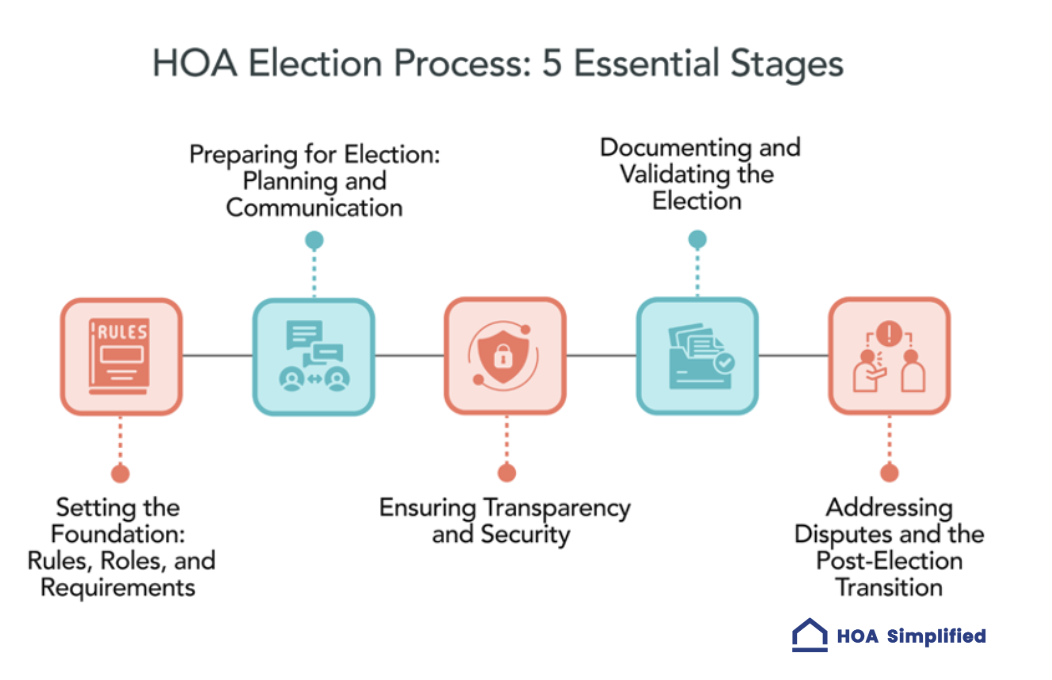
Seen below is a step-by-step guide to running your own election:
Ready to simplify your HOA? Request a Proposal
Reduced Quorum for Second Elections
California law now allows reduced quorum requirements when initial elections fail due to insufficient participation. If the first attempt doesn't meet quorum thresholds, boards can schedule a second election requiring only 20% attendance.
This prevents governance paralysis in communities with low participation rates. Boards must update bylaws and election notices to reflect these new procedures.
Utility Line Responsibility Expands
HOAs now bear responsibility for utility line repairs that begin in common areas, even if those lines serve only one unit. Previously, repair obligations were less clear when infrastructure crossed property boundaries.
This change affects reserve planning significantly. Boards should inventory all utility infrastructure, assess condition, and adjust reserve studies accordingly. Communities may face unexpected repair costs without proper planning.
Assessment Caps for Affordable Housing
HOAs with 20 or fewer deed-restricted affordable housing units face new assessment increase limits. Annual increases cannot exceed 5% plus the Consumer Price Index.
This cap protects affordable housing residents from excessive fee increases. Boards must disclose these restrictions to prospective buyers and factor them into long-term budget planning.
Wooden Deck Safety Inspections Required
By January 2025, HOAs with three or more units must complete safety inspections for all elevated wooden decks. Only licensed professionals can perform these inspections.
Communities with multiple deck structures should schedule inspections immediately to meet the deadline. Inspection reports may reveal needed repairs that require reserve fund allocation or emergency assessments.
Virtual Meetings Fully Authorized
Boards can now conduct meetings entirely online without requiring any in-person option. Meeting notices must include Zoom links or dial-in information for remote participation.
This flexibility benefits boards with geographically dispersed members and reduces meeting logistics costs. However, associations should ensure all members have technology access or provide assistance for those who need it.
Small Claims Authority Increased
HOAs may now file small claims actions up to $6,250, up from previous limits. This streamlines collection of unpaid dues and resolution of minor disputes without requiring costly superior court litigation.
Boards can pursue delinquent accounts and property damage claims more efficiently. However, proper notice procedures and due process remain essential before filing any legal action.
Compliance Action Steps
California boards should immediately review these changes with legal counsel. Update governing documents, election procedures, and reserve studies to reflect new requirements.
Schedule wooden deck inspections if applicable. Evaluate electronic voting systems if member interest exists. Review utility infrastructure and adjust budgets accordingly.
Staying ahead of compliance requirements protects communities from penalties while improving operations. These changes reflect California's ongoing effort to modernize HOA governance and protect homeowner interests.