Water always finds the lowest point. When your HOA's drainage systems work properly, that point is far away from buildings, foundations, and shared spaces. When they fail, you're looking at foundation damage, landscape destruction, and homeowner disputes that can tear apart community relationships.
Most boards don't think about drainage until something goes wrong. That's too late. Understanding how water moves through your community, spotting early warning signs, and maintaining drainage infrastructure prevents catastrophically expensive repairs.
What HOA Drainage Systems Include
Drainage is more than just gutters and downspouts. Your community's water control systems encompass everything that manages how rain, irrigation, and groundwater move through your property.
Grading directs water away from structures using carefully sloped land. Gutters and downspouts collect roof runoff. Storm drains capture and channel water off streets and parking areas. Irrigation systems water landscaping while (ideally) avoiding overwatering that creates drainage problems.
All these elements work together. When one component fails, it often triggers cascading issues throughout the system. A clogged storm drain backs up onto landscaping, which becomes waterlogged, which leads to erosion that damages the slope grading.
Warning Signs Your Drainage Is Failing
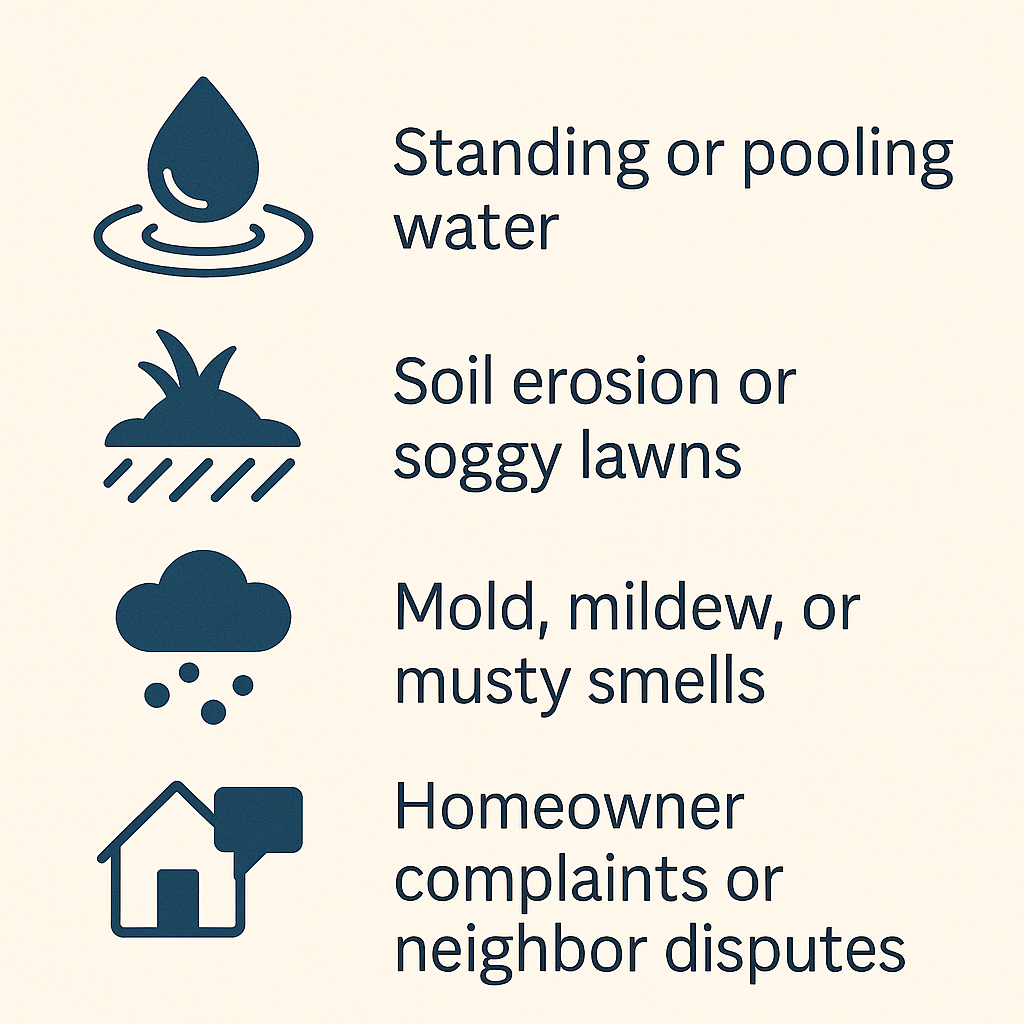
Standing water is the most obvious red flag. Pools that remain for more than 24 hours after rain indicate drainage problems. Pay special attention to water near building foundations, in low-lying landscape areas, or on paved surfaces.
Soggy, waterlogged landscaping suggests either drainage failures or irrigation problems. Plants don't need standing water around their roots for days at a time. Persistent wet spots damage plants and create perfect breeding grounds for mosquitoes.
Foundation issues often trace back to drainage failures. Water seeping into basements or crawl spaces, cracks in foundation walls, or doors and windows that suddenly don't close properly all point to water infiltration from poor drainage.
Erosion reveals itself through exposed soil, gullies forming in slopes, or settling around structures. When water flows where it shouldn't, it carries soil with it and undermines the carefully designed grading that's supposed to protect your community.
Neighbor disputes over water runoff mean drainage has become a legal liability. When one homeowner's property directs water onto another's lot, you have both a practical problem and a potential lawsuit on your hands.
Ready to simplify your HOA? Request a Proposal
Common Causes of Drainage Problems
Poor grading is often built into older communities. Developers sometimes cut corners on proper slope design, leaving HOAs to deal with the consequences for decades. Even good original grading can shift over time as soil settles and landscaping changes alter how water flows.
Blocked gutters and drains are entirely preventable. Leaves, debris, and sediment accumulate in drainage systems. Without regular cleaning, gutters overflow and drains back up, sending water exactly where it shouldn't go.
Excessive irrigation wastes water and creates drainage problems. Sprinkler systems running too long or too frequently saturate soil beyond its capacity to absorb water. The excess has to go somewhere, and it usually flows toward foundations or neighboring properties.
Unauthorized hardscaping compounds drainage issues. When homeowners add patios, walkways, or other impervious surfaces without considering drainage, they change how water moves. What used to absorb into the ground now runs off, often crossing property lines and creating conflicts.
Who's Responsible for What
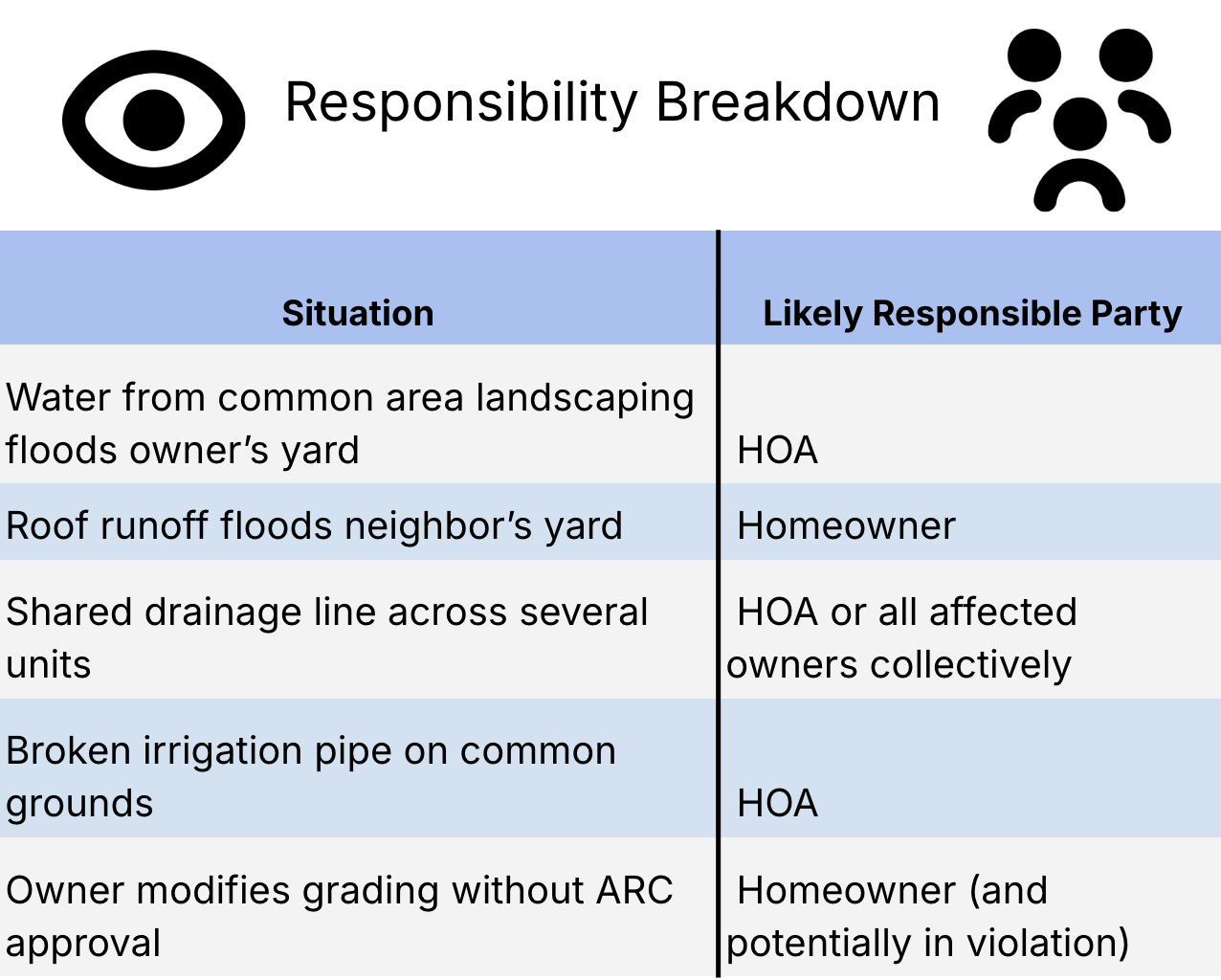
Your CC&Rs define whether drainage issues fall under HOA responsibility or homeowner responsibility. This varies dramatically between communities.
Some HOAs maintain all drainage infrastructure including gutters, downspouts, and grading. Others require homeowners to handle everything on their individual lots while the association manages only common areas. Many communities fall somewhere in between.
Check your governing documents before assuming who pays for repairs. The answer affects how quickly problems get fixed and where the money comes from. Misunderstanding this responsibility leads to delayed repairs, homeowner frustration, and potential legal disputes.
Solutions for Drainage Problems
Simple fixes often solve minor drainage issues. Redirecting downspouts away from foundations, extending them with splash blocks or underground pipes, costs relatively little and prevents major damage.
Clearing debris from gutters and storm drains should happen regularly, not just when you notice backups. Schedule this maintenance at least twice yearly, more often if your community has significant tree coverage.
Major drainage repairs require professional help. Installing French drains (underground gravel-filled trenches with perforated pipe), creating dry wells (buried structures that collect and slowly release water), or redesigning grade slopes involves specialized knowledge and equipment.
Stormwater system upgrades may be necessary in older communities or areas experiencing increased rainfall due to climate changes. These projects are expensive but far less costly than dealing with repeated foundation repairs, landscape replacement, and legal battles.
Prevention Beats Repairs Every Time
Regular inspections catch drainage problems before they become emergencies. Walk your community after heavy rain and note where water pools, which slopes show erosion, and what drains seem slow to clear.
Maintain your drainage infrastructure consistently. Clean gutters twice yearly. Inspect and clear storm drains quarterly. Check that downspouts discharge away from foundations and that the ground slopes away from buildings.
Prevent unauthorized changes that affect drainage. Require homeowners to submit modification requests before adding hardscaping, changing landscape grading, or altering their property's drainage patterns.
Document everything related to drainage. Photograph problem areas, keep records of maintenance performed, and save all invoices for drainage work. This documentation proves invaluable when disputes arise or when you need to demonstrate proper maintenance for insurance claims.
When to Call Professionals
Don't wait until you have foundation cracks or basement flooding to get expert help. If you notice persistent drainage issues that simple fixes don't resolve, bring in a civil engineer or drainage specialist to assess the situation.
Professional drainage evaluations identify underlying problems you might miss. They can design comprehensive solutions that address root causes rather than just symptoms. The upfront cost of proper assessment saves money compared to repeatedly attempting inadequate repairs.
Some drainage problems involve regulations you need professional help navigating. Stormwater systems often fall under local ordinances about how communities can discharge water. Compliance matters, and violations create legal exposure.
The Real Cost of Ignoring Drainage

Deferred drainage maintenance doesn't save money. It just ensures that when you finally address problems, they'll be exponentially more expensive to fix.
Foundation repairs cost thousands to tens of thousands of dollars per home. Landscape replacement from water damage adds up quickly. Legal fees from homeowner disputes over drainage issues dwarf the cost of preventive maintenance.
Poor drainage also tanks property values. Homebuyers and their inspectors spot drainage problems. Visible issues like erosion, standing water, or foundation cracks either kill sales or drive down prices significantly.
Your drainage system protects the largest investment most homeowners will ever make. Treat it seriously, maintain it consistently, and address problems promptly. Your community's financial health depends on it.