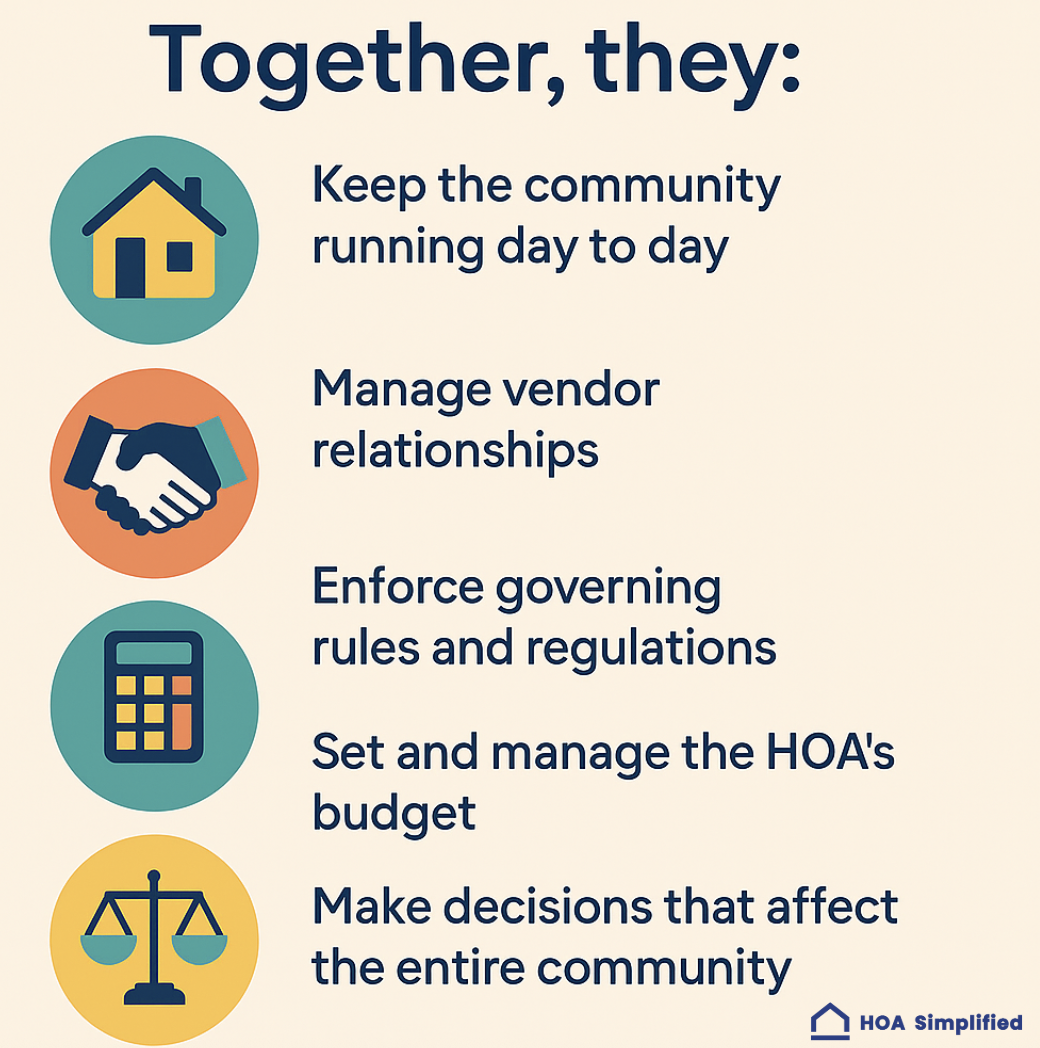
The board is the backbone of the community, helping preserve property values, maintain shared spaces, and make long-term decisions that benefit everyone. When every board member understands their role, the HOA works better for everyone. Clear responsibilities prevent confusion, improve efficiency, and create accountability.

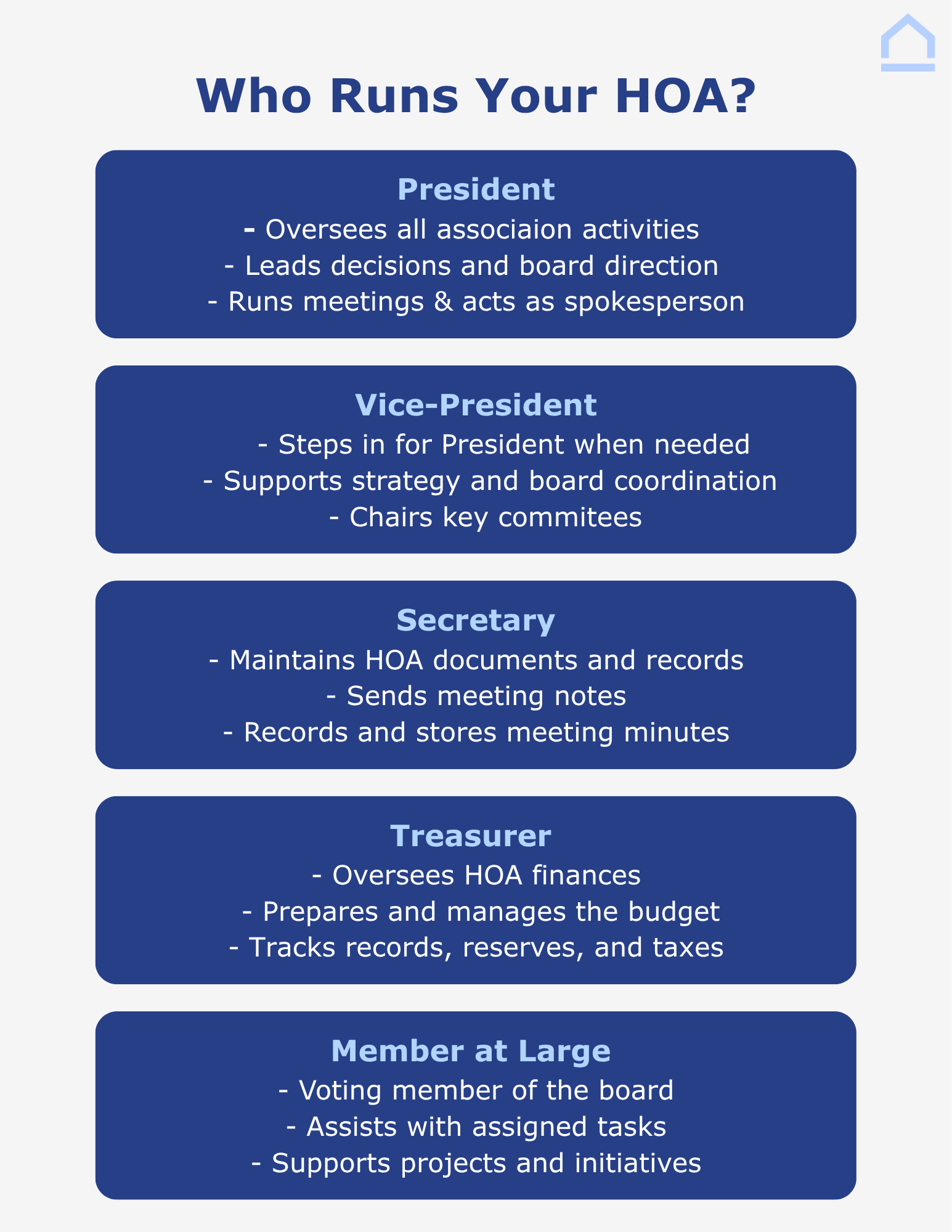
The President: Community Leader
The board leader and primary contact serves as the community's public face. A strong president fosters collaboration, keeps meetings efficient, and sets the tone for how the community operates.
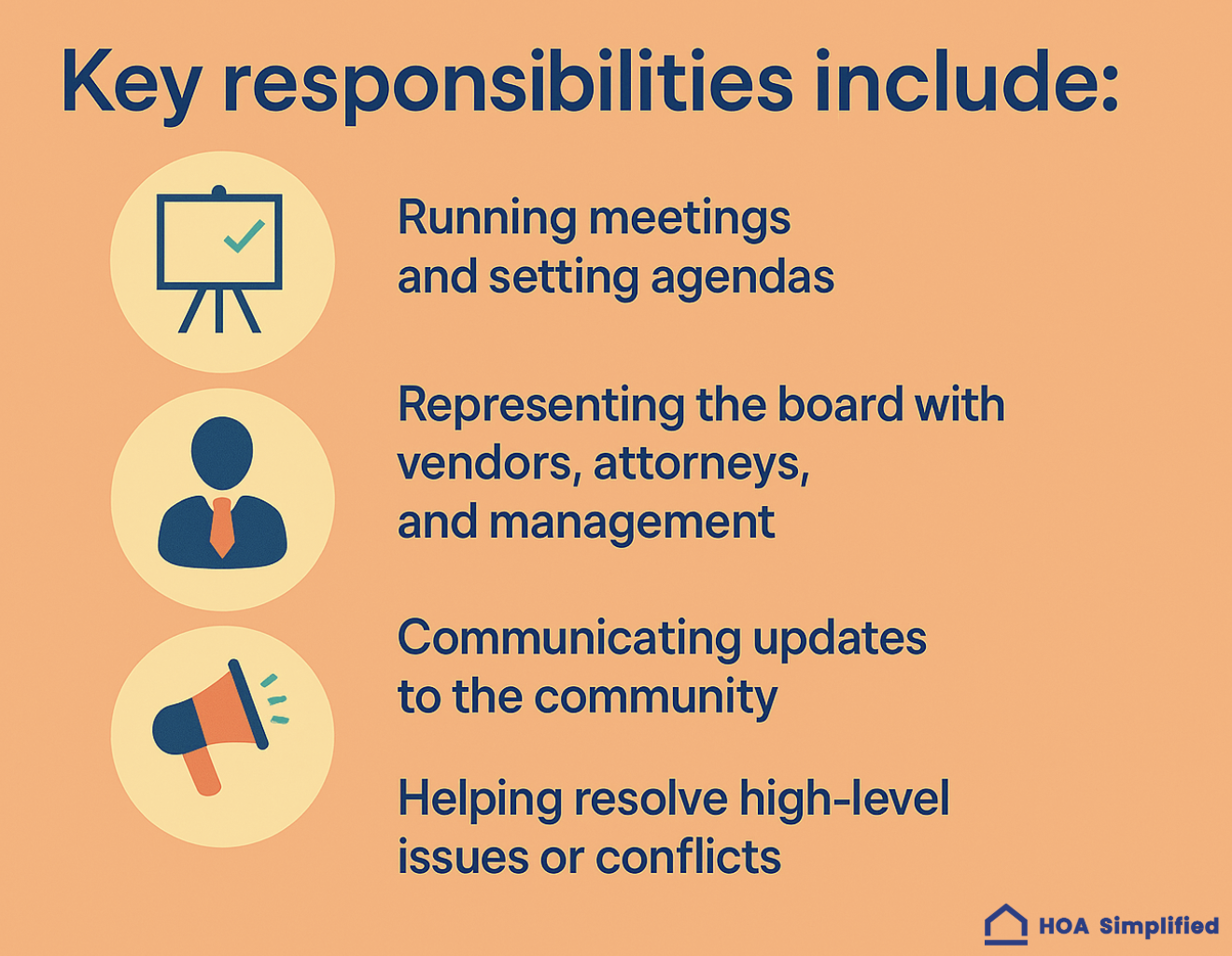
Primary Responsibilities include leading board meetings according to the agenda, representing the association in formal matters, coordinating with community partners and vendors, and signing contracts and official documents on behalf of the association.
The president doesn't act alone or make unilateral decisions. Rather, the president facilitates discussion and helps the board reach consensus. Leadership means guiding the group, not dictating to it.
Effective presidents prepare thoroughly for meetings. They review materials in advance, consult with other officers about agenda items, and anticipate potential issues. Preparation prevents meetings from becoming chaotic.
Communication skills matter enormously. The president often delivers difficult news, mediates conflicts, and explains board decisions. Clear, respectful communication builds trust even when decisions disappoint some homeowners.

The Vice President: Ready Support
The vice president serves as second-in-command, assuming leadership duties when the president is unavailable. This role's scope varies depending on community needs and the president's preferences.
Core Duties involve attending all board meetings, staying informed on all issues, stepping in for the president when needed, and taking on special projects as assigned by the board.
Some vice presidents focus on specific areas like committee coordination or vendor oversight. Others serve primarily as backup for the president. The role adapts to community circumstances.
Smart presidents involve vice presidents in key decisions and important communications. This preparation ensures smooth transitions when the vice president must step in. No one should be surprised when the VP acts as president.
Vice presidents often become future presidents. The role provides valuable experience and institutional knowledge. Boards should view the vice presidency as leadership development.

The Secretary: Master of Records
Organization is the secretary's superpower. This position handles records and documentation, ensuring the board's actions are transparent and well-documented.
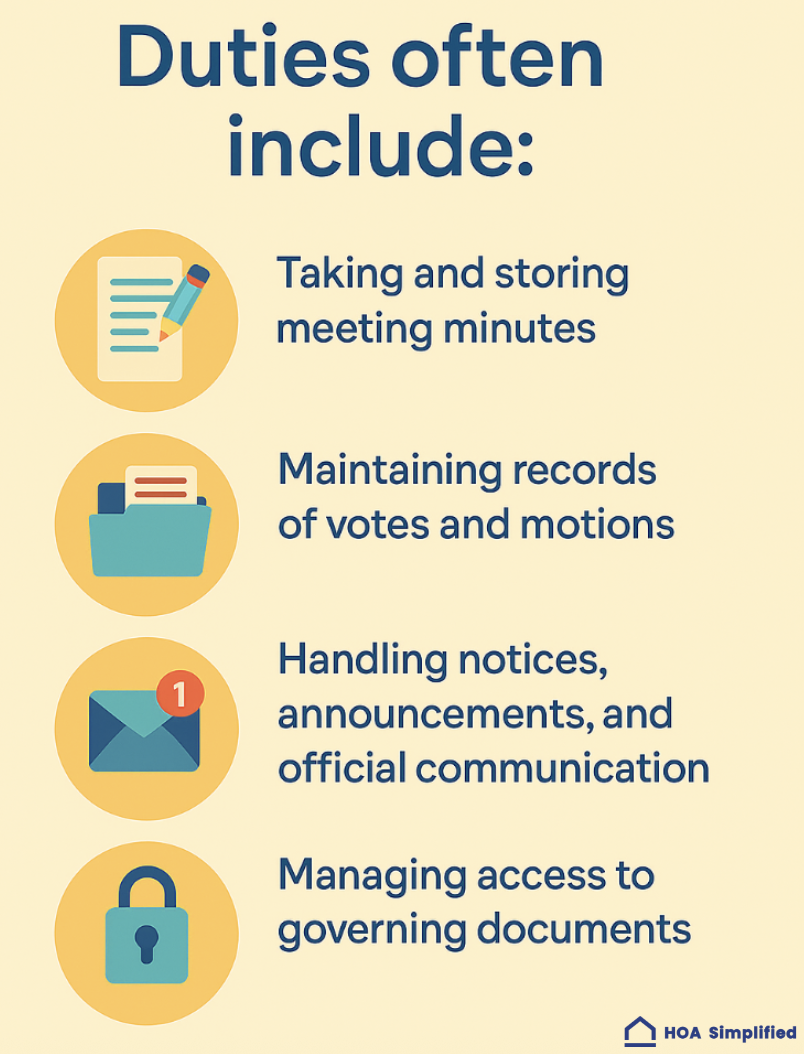
Essential Responsibilities include recording detailed meeting minutes, maintaining official association records, distributing meeting notices and agendas, and managing correspondence on behalf of the board.
Meeting minutes serve as the official record of board actions. They must capture motions, votes, and key discussions without editorializing. Good minutes answer "what was decided" without excessive detail about deliberations.
Record retention follows state law and governing documents. The secretary ensures documents are properly stored, organized, and accessible. Poor record-keeping creates problems when boards need historical information.
Some secretaries also handle routine correspondence. Requests for documents, responses to homeowner questions, and official notices may fall under the secretary's duties. Clear communication standards maintain professionalism.
Technology helps secretaries work efficiently. Cloud storage, document management systems, and digital signing platforms streamline workflows. Modern tools beat paper filing systems.

Need help with board operations and documentation? Get Professional Support
The Treasurer: Financial Steward
The treasurer manages the financial side of the association, maintaining financial stability and compliance. While the treasurer usually takes the lead, every board member shares responsibility for ensuring the numbers are accurate and realistic.
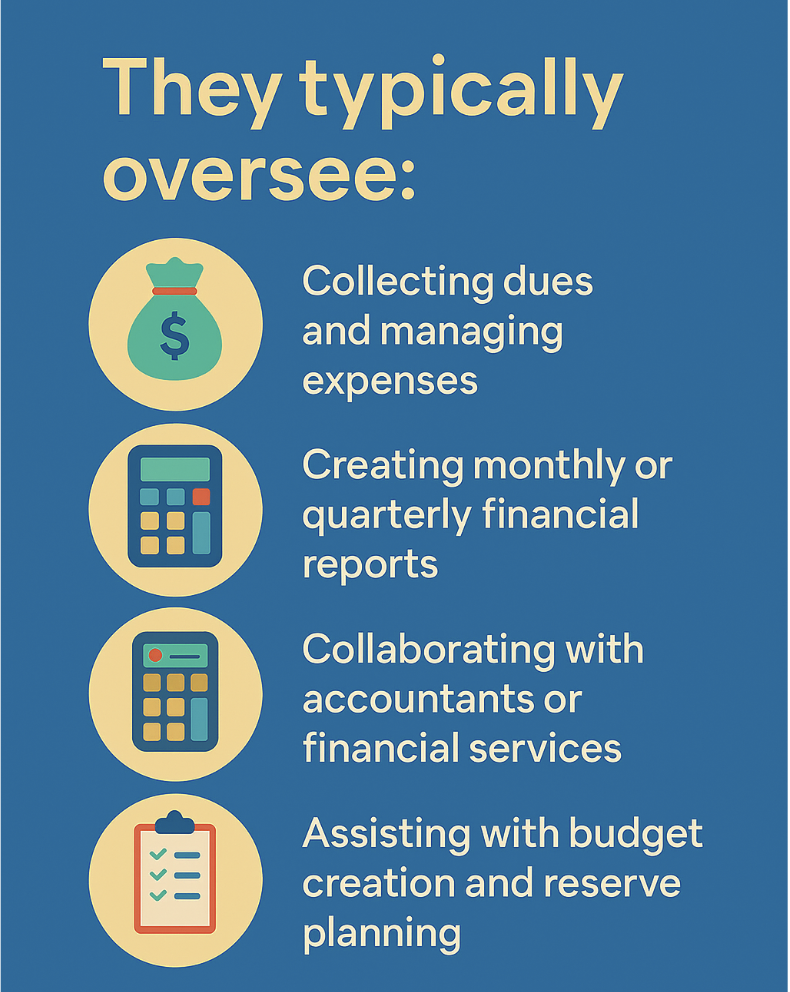
Key Duties encompass preparing and monitoring the annual budget, reviewing monthly financial statements, overseeing accounts receivable and payable, ensuring proper financial controls and procedures, and coordinating annual audits or financial reviews.
Budget preparation requires understanding both income and expenses. The treasurer must project realistic revenues, plan for known expenses, account for inflation and increases, and include adequate reserve contributions.
Monthly financial review helps catch problems early. The treasurer should understand variances between budgeted and actual amounts. Significant differences require investigation and explanation.
Financial reporting keeps the board and homeowners informed. Clear reports showing income, expenses, reserves, and account balances demonstrate transparency. Homeowners trust boards that communicate financial information openly.
Tax compliance falls primarily on the treasurer. This includes filing annual returns, maintaining tax-exempt status where applicable, issuing 1099s to vendors, and coordinating with tax professionals.

Members-at-Large: Active Contributors
Not all board members hold officer titles. Members-at-large attend meetings, vote on decisions, and take on specific responsibilities as needed. These positions are equally important to board function.
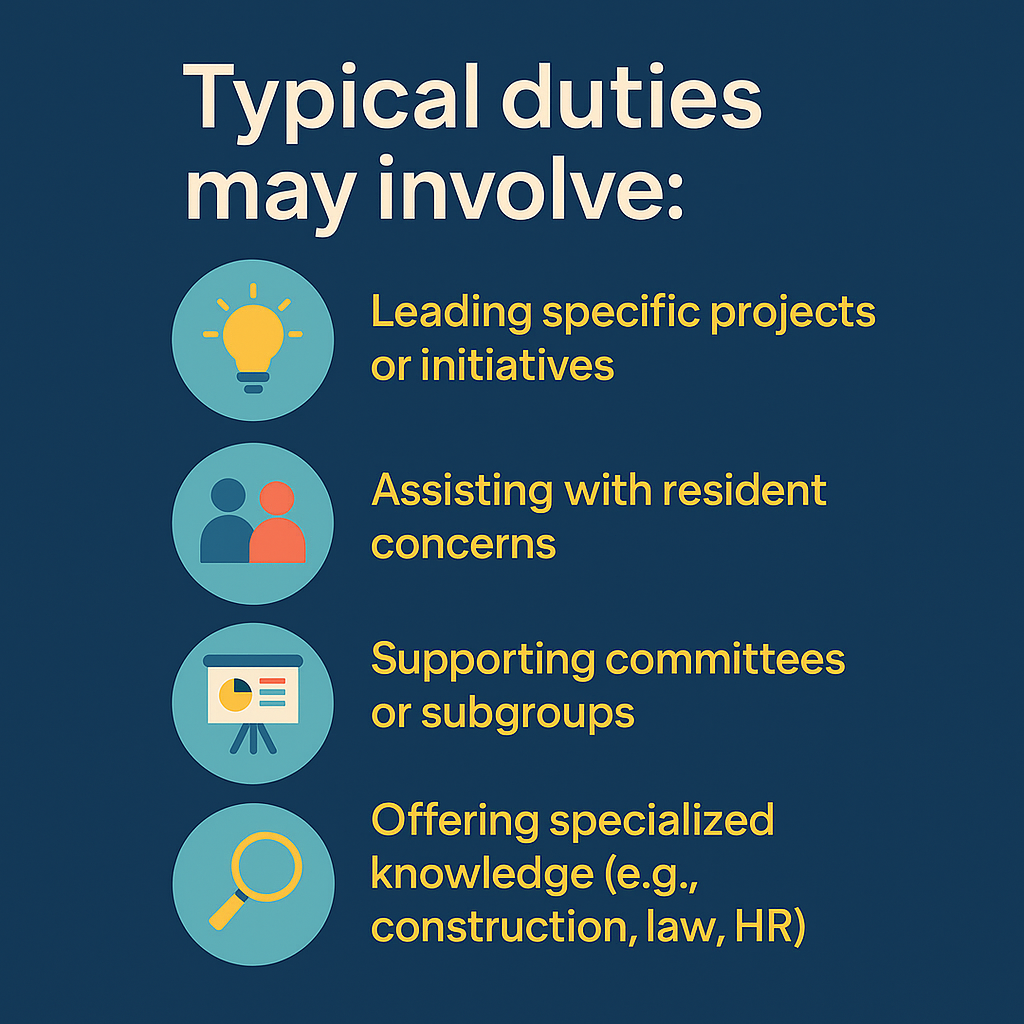
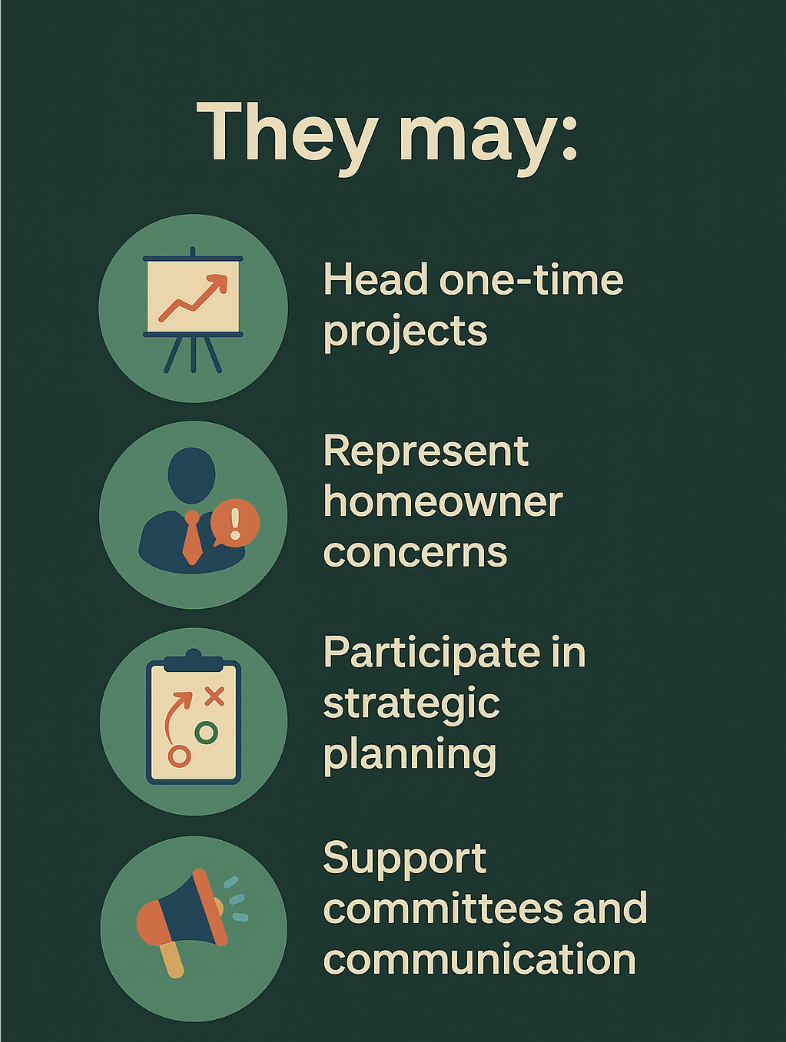
Standard Responsibilities involve attending all scheduled board meetings, participating in discussions and decisions, serving on committees, and representing homeowner interests.
Members-at-large often chair committees or take on special projects. Their focus areas might include architectural review, landscaping oversight, social events, or communications. Distributed responsibilities prevent officer burnout.
These positions provide training ground for future officers. New board members often start as members-at-large before taking on officer roles. The experience builds knowledge and confidence.
Every board member shares fiduciary duties regardless of title. Members-at-large must act in the association's best interest, make informed decisions, and maintain confidentiality. Their votes carry equal weight with officers.

The Role of Committees
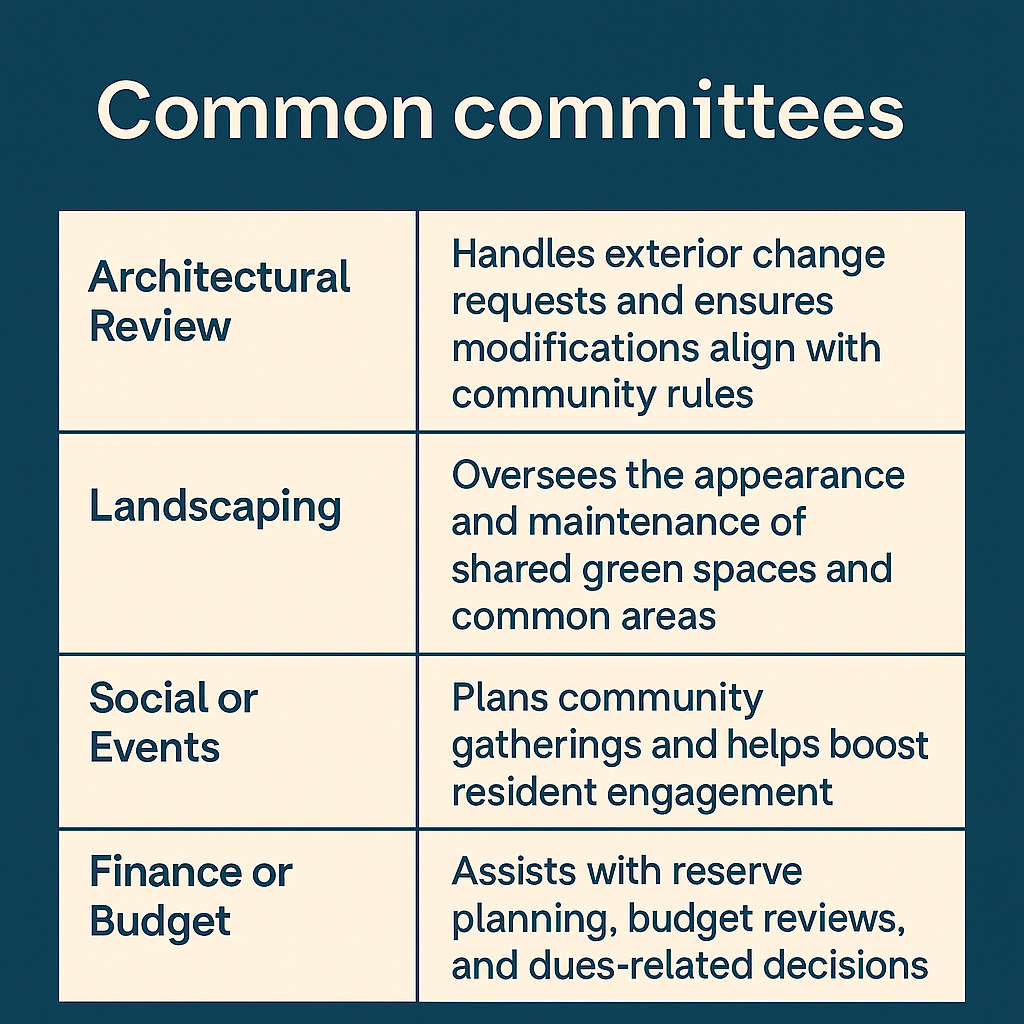
Volunteer committees address specific areas like landscaping, events, and architectural review. These groups expand participation beyond the board and reduce board workload.
Committees research issues and make recommendations. The board retains final decision-making authority, but committee input improves decision quality. Subject matter expertise helps boards make better choices.
Popular committees include architectural review, landscape oversight, social events, budget and finance, and communications.
Clear committee charters define scope and authority. Committees should know what decisions they can make independently and what requires board approval. Boundaries prevent confusion and overreach.
Board liaisons maintain communication between committees and the board. Usually a board member chairs or coordinates with each committee. Regular updates keep everyone informed.

Working Together Effectively
Board effectiveness requires more than understanding individual roles. Successful boards operate as cohesive teams.
Regular Communication between meetings keeps everyone informed. Officers shouldn't surprise each other with information or decisions. Email, texts, or quick calls maintain alignment.
Mutual Respect prevents personality conflicts from damaging board function. Board members will disagree on issues. Professional courtesy allows productive debate without personal attacks.
Clear Processes for decision-making create predictability. Everyone should know how issues move from discussion to decision. Documented procedures prevent confusion.
Shared Vision unites board members around common goals. Take time periodically to discuss long-term objectives. Alignment on the big picture makes individual decisions easier.
Essential Board Concepts
Board Meetings are regular sessions where decisions are made. Most boards meet monthly or quarterly. Consistent scheduling allows planning.
Governing Documents including CC&Rs, bylaws, and policies guide all board actions. Board members must know these documents thoroughly.
Quorum is the minimum number of board members required for valid meetings and decisions. Without quorum, boards cannot conduct official business.
Developing as a Board
New board members need orientation and training. Effective boards invest in education about governing documents, fiduciary duties, state laws, and community history.
Experienced members should mentor newer members. Institutional knowledge transfers through relationships, not just document reviews. Share context and lessons learned.
Consider professional development opportunities. HOA conferences, webinars, and training courses improve board competence. Better-trained boards make better decisions.
Professional community partners provide ongoing guidance and support. Expert advice helps boards navigate complex issues confidently and implement best practices effectively.