HOA board meetings shape every aspect of your community. Budgets get approved, maintenance projects move forward, rules get enforced, and policies change. These decisions directly affect your property value, monthly costs, and daily living experience.
Yet many homeowners don't realize they can attend these meetings. Even more don't understand why showing up matters.
Most state laws require HOA board meetings to be open to all homeowners. There are limited exceptions for executive sessions discussing legal matters, personnel issues, or specific homeowner violations. But the regular business of running your community happens in meetings you have every right to observe.
What Happens at Board Meetings
Board meetings aren't social gatherings. They're working sessions where volunteer board members make operational and financial decisions for your community.
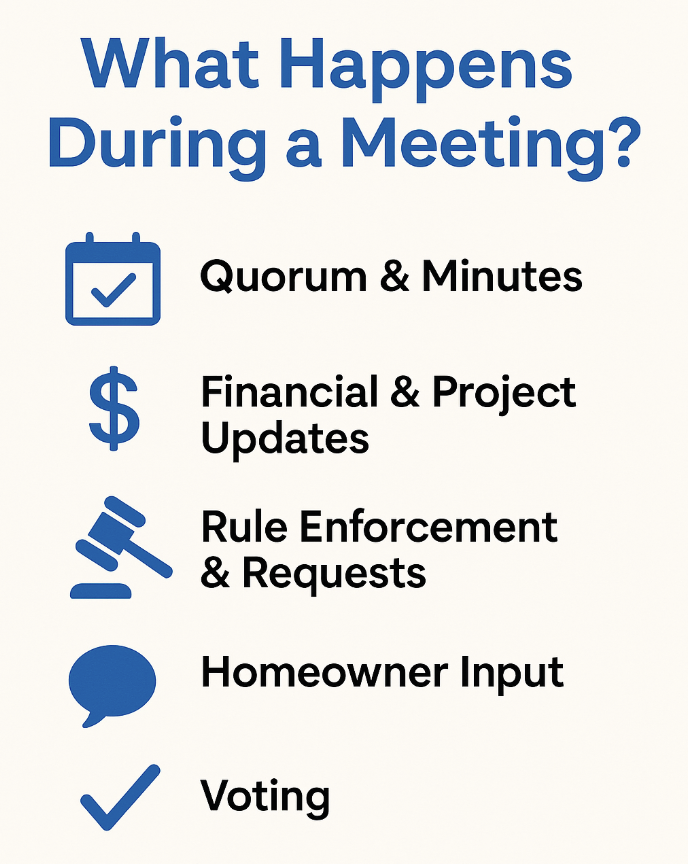
A typical meeting follows this structure: the board confirms that enough members are present (quorum), then approves minutes from the previous session. Next comes financial updates including bank balances, budget variances, and reserve fund status.
Project updates follow. You'll hear about ongoing repairs, vendor performance, and timeline adjustments for planned improvements. The board discusses homeowner requests for property modifications and reviews rule violations or compliance issues.
Near the end, most meetings include designated time for homeowner input. This is your opportunity to ask questions, raise concerns, or provide feedback on board decisions. The exact timing and format depends on your community's bylaws and state requirements.
Finally, the board votes on pending matters: approving budgets, authorizing contracts, imposing fines, or updating policies.
Need a structured agenda for your next meeting? Get Our Free Meeting Agenda Template
Why Your Attendance Matters
Attending board meetings gives you transparency into how your HOA operates. You see exactly where your dues go, what projects are planned, and how rules get enforced.
This visibility matters because you're trusting volunteers with significant financial decisions. Your monthly assessments fund everything from landscaping to insurance to major repairs. Watching how the board allocates these resources helps you evaluate whether leadership is acting in the community's best interest.
You'll also learn about upcoming projects before they affect you. If the board is considering a special assessment for roof replacements, you want advance notice to plan financially. If new parking restrictions are under discussion, you'd rather know early than discover them through an enforcement notice.
Board meetings reveal how decisions actually get made in your community. You'll understand the reasoning behind policies that might otherwise seem arbitrary. You'll see what constraints the board faces and what options they're weighing.
When You Should Definitely Attend
Certain meetings demand homeowner attention. Annual meetings set the budget for the coming year and often include board elections. These sessions determine who leads your community and how your money gets spent.
Show up when the board is discussing issues that directly affect you. If landscape renovations near your unit are on the agenda, you want to hear the plans and ask questions. If rule changes could impact how you use your property, participate in that conversation.
Attend when you're concerned about board decisions or community direction. Maybe you've noticed deferred maintenance, questionable vendor choices, or poor communication. Observing how the board operates helps you determine whether your concerns are valid and what action might be appropriate.
How Meetings Are Conducted
Board meetings typically happen in accessible public spaces like community centers or libraries. Many HOAs now offer online attendance options, making participation easier for homeowners with schedule conflicts.
Your association must provide advance notice of meetings according to state law and your bylaws. This notice should include the date, time, location, and often a preliminary agenda. Some communities post this information on bulletin boards, others send email notifications, and many do both.
Meeting frequency varies by community. Monthly meetings are common, though some smaller HOAs meet quarterly. Check your governing documents or ask your board for the schedule.
Understanding Your Role as an Observer
Homeowners can attend board meetings, but you're there as an observer, not a participant in board deliberations. The elected or appointed board members conduct the actual business of the meeting.
Most meetings include a designated homeowner comment period. This is when you can speak, ask questions, or raise issues. Respect the time limits and stay on topic. Board members are volunteers balancing these responsibilities with their own lives.
Don't expect immediate answers to complex questions. The board might need time to research issues, consult legal counsel, or review documents before responding. Follow up in writing if you need detailed information.
When Meetings Can Be Closed
Executive sessions handle sensitive matters that require confidentiality. Discussions with legal counsel about potential litigation, personnel decisions about employees or contractors, and specific disciplinary actions against individual homeowners typically happen in closed session.
These exceptions exist for legitimate reasons, but they shouldn't become the norm. If your board regularly conducts business in executive session without clear justification, that's a red flag worth questioning.
Making the Most of Attendance
Review the agenda beforehand if it's available. This helps you understand what topics will be discussed and prepares you to ask informed questions during the homeowner comment period.
Take notes on decisions that affect you or that you have questions about. Board meeting minutes provide an official record, but your own notes capture details that might not appear in formal documentation.
Build relationships with board members outside of meetings. They're your neighbors dealing with complex community issues. Respectful engagement makes it more likely they'll seriously consider your input.
Why This Transparency Benefits Everyone
Open board meetings serve both homeowners and board members. You get visibility into community operations. Board members benefit from homeowner input and the accountability that comes with public meetings.
This transparency builds trust. When homeowners see the real challenges boards face and the thoughtful process behind decisions, they're more likely to support leadership even when they disagree with specific choices.
It also improves governance. Boards make better decisions when they know homeowners are watching and can ask tough questions. The possibility of homeowner attendance encourages thorough preparation and careful deliberation.
Your HOA is your investment and your home. Board meetings are where decisions get made that affect both. Exercise your right to attend, stay informed about your community, and participate in the process that shapes where you live.