Self-managed HOA boards face unique challenges during emergencies. Without dedicated staff or professional companies handling day-to-day operations, volunteer board members must respond quickly to crises while juggling their regular jobs and responsibilities.
Advance planning makes the difference between chaos and effective crisis response.
Create a Basic Emergency Plan
Start by identifying likely emergencies for your area. Different regions face different risks.
California communities plan for earthquakes and wildfires. Florida associations prepare for hurricanes. Northern communities ready for severe winter storms. Every area has power outages, plumbing failures, and weather events.
List the most probable emergencies your community might face. For each scenario, develop step-by-step response procedures.
Who contacts emergency services? Who communicates with residents? Who coordinates with vendors? Assign clear responsibilities so board members know their roles during crises.
Document these procedures in writing. Keep copies digitally and physically in multiple locations. Email them to all board members. Store them where new board members can access them after leadership transitions.
Maintain a Ready Vendor List
During emergencies, you can't spend hours researching contractors. You need immediate access to reliable service providers.
Compile contact information for:
- Emergency plumbers
- Electricians
- Restoration companies for water or fire damage
- Tree removal services
- Roofing contractors
- Glass repair
- Security services
Include after-hours emergency numbers where available. Identify backup options for each category in case your primary vendor is unavailable or overwhelmed during widespread emergencies. Update this list annually. Vendors change numbers, go out of business, or stop serving your area. An outdated emergency contact list is useless when you actually need it.
Store the vendor list digitally in shared cloud storage that all board members can access. Keep physical copies in multiple locations.
Board Communication Responsibilities
During emergencies, residents need information quickly. How severe is the situation? What should they do? When will services be restored?
Establish multiple communication channels:
- Email distribution lists
- Text message systems
- Community bulletin boards
- Website or social media updates
Use all available channels during crises. Some residents check email regularly. Others prefer text messages. Bulletin boards reach residents without reliable internet.
Designate one board member as the primary communicator. Multiple people sending conflicting updates creates confusion. Centralize messaging to maintain consistency.
Understand Your Insurance Coverage
Many board members have never read their community's insurance policies. That's a problem during emergencies when you need to know immediately what's covered.
Review your policies now, before crises occur. Understand:
- What types of damage are covered
- Coverage limits and deductibles
- Whether mold damage is included
- Flood and earthquake coverage (usually separate policies)
- Emergency repair coverage and limits
- Claims reporting procedures and deadlines
Store both digital and physical copies of insurance policies where board members can access them quickly. Include your insurance agent's contact information with after-hours emergency numbers if available.
Ask your agent to explain coverage in plain language. Insurance policies are dense legal documents. Don't assume you understand coverage without confirmation.
Supplemental Coverage Considerations
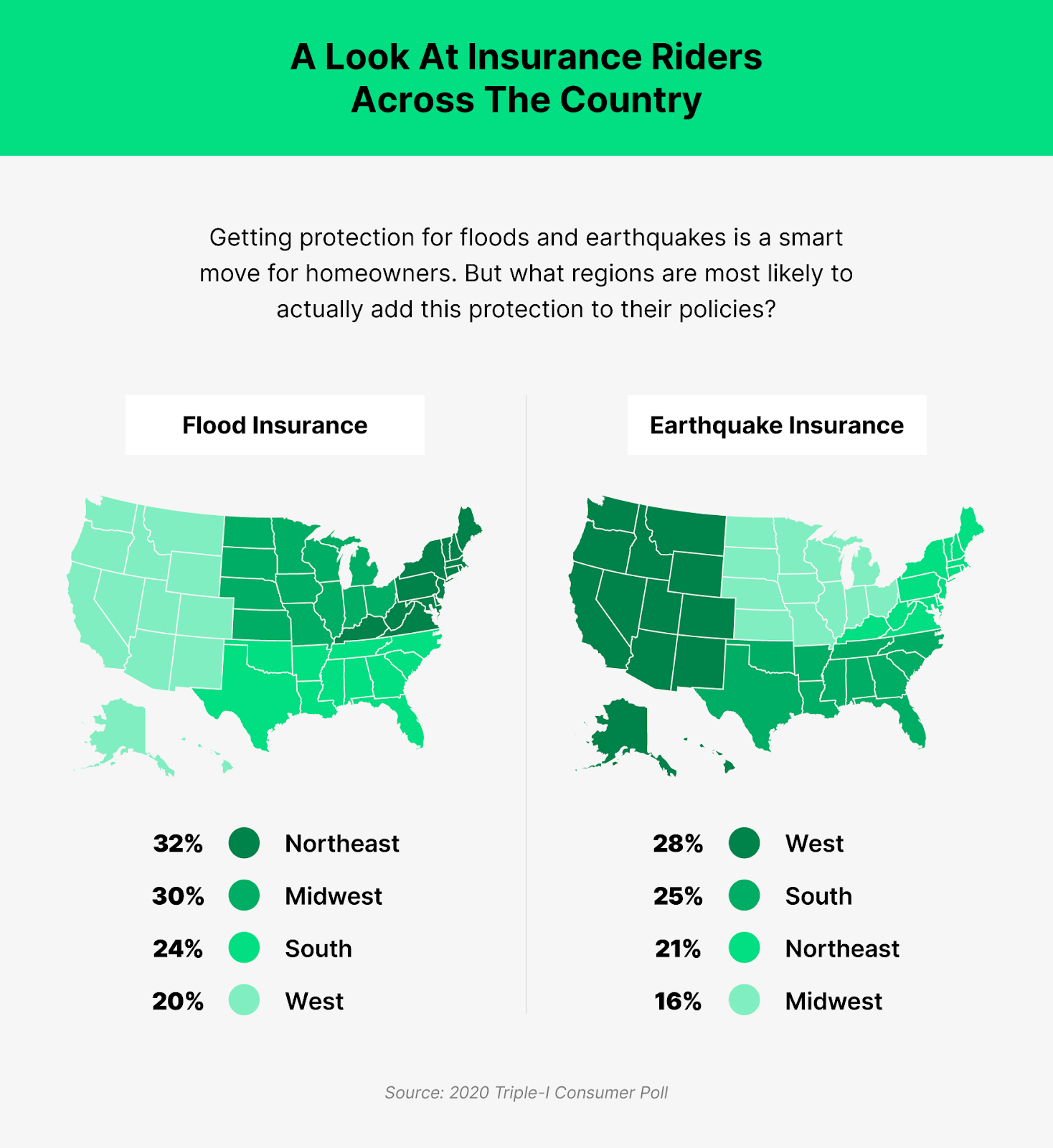
Standard HOA policies don't cover everything. In western regions, approximately 20% of homeowners carry flood insurance and 28% have earthquake coverage separately.
Some damage types require specialized policies:
- Flood insurance through the National Flood Insurance Program
- Earthquake coverage (usually excluded from standard policies)
- Sewer backup protection
- Equipment breakdown coverage
See the chart below. Homeowners are increasingly adding flood and earthquake insurance to their plan. In the west, 20% have flood insurance while 28% have earthquake insurance.
Need help reviewing insurance coverage? Get a Free Proposal
Evaluate whether your community's risk profile justifies additional coverage. Premiums cost money, but catastrophic uninsured damage costs more.
Documentation Protocol for Emergencies
From the moment an emergency begins, document everything. This documentation protects your community during insurance claims and potential disputes.
Photograph all damage from multiple angles before any repairs begin. Time-stamped photos prove damage severity and timing.
Maintain an action log recording what happened when, who was contacted, what actions were taken, and who authorized decisions.
Preserve all receipts and invoices for emergency expenditures. Even small purchases matter during insurance claims.
Document communication with residents, vendors, insurance companies, and emergency services.
Thorough documentation feels tedious during crises. But it's essential for insurance reimbursement and defending board decisions if questions arise later.
Emergency Decision Authority
Board decisions typically require meetings and votes. Emergencies don't wait for scheduled board meetings.
Your governing documents should address emergency decision authority. If they don't, consider amending them to clarify:
- Which board members can authorize emergency expenditures
- Spending limits for emergency decisions without full board votes
- How quickly emergency decisions must be ratified by the full board
Clear authority prevents paralysis during crises when immediate action is necessary.
After the Emergency
Once immediate dangers pass, focus on recovery:
- File insurance claims promptly
- Document all repair work and expenses
- Communicate recovery timelines to residents
- Review emergency response to identify improvements
- Update emergency plans based on lessons learned
Every emergency teaches valuable lessons. Capture those insights while they're fresh and incorporate them into updated plans.
Practice Makes Prepared
Emergency plans sitting in a drawer don't help during actual crises. Review plans annually with the full board.
Walk through scenarios: What would we do if the main water line broke at midnight? How would we respond to a fire in a common area building? Who would we call first if a severe storm damaged multiple roofs?
This mental rehearsal helps board members respond more effectively when real emergencies occur.
The Bottom Line
Self-managed boards can handle emergencies effectively with proper preparation. Clear plans, accessible vendor lists, insurance understanding, and documentation protocols enable volunteer boards to respond decisively during crises.
Advance planning reduces stress and ensures comprehensive emergency response. The time you invest in preparation pays off during actual emergencies when quick, informed decisions protect your community and minimize damage.
Don't wait for a crisis to develop your emergency plan. Create it now, while you have time to think clearly and research thoroughly. Future you will be grateful you prepared.